
What NASA announced
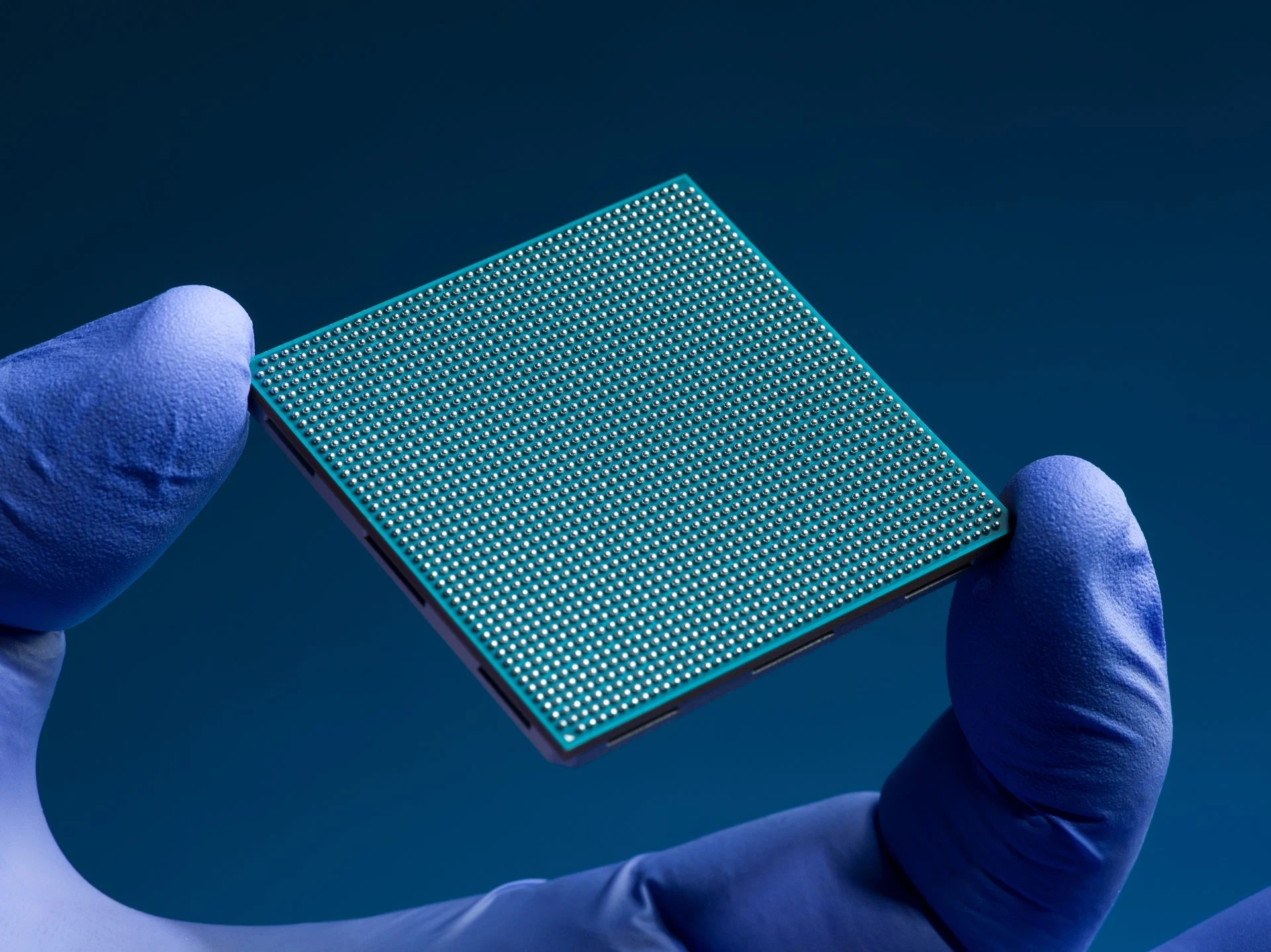
NASA is developing a powerful new computer chip designed to dramatically increase the intelligence and performance of future spacecraft. Through a commercial partnership, the project is creating advanced processing technology capable of helping spacecraft operate more independently during missions far from Earth. NASA's High Performance Spaceflight Computing project is focused on boosting the computing capabilities of spacecraft used in space exploration.
The new chip is code-named the High Performance Spaceflight Computing — HPSC — project. It is intended to replace older semiconductors used by current space-grade electronics and to power advanced missions. The chip is designed to withstand the extreme conditions of deep space. It will boost spacecraft autonomy by enabling faster scientific analysis through onboard AI. It has been described as "fault-tolerant, flexible, and extremely high-performing".
Testing at JPL began in February 2026 and continues through mid-2026. JPL project manager Jim Butler described the testing regimen as putting the chips "through the wringer" — with radiation, thermal, and shock tests running in parallel with functional performance evaluations that use high-fidelity landing scenarios drawn from real NASA missions to simulate the computational demands a spacecraft would face during a planetary descent.
The numbers from those tests are what have the space engineering community paying close attention. Engineers anticipate up to 100 times the performance of current spaceflight processors, with early testing suggesting even higher gains under certain conditions. In current evaluations at JPL, engineers are reportedly seeing around 50 times the performance of radiation-hardened Mars chips currently used in spacecraft. Some configurations are projecting up to 500 times the capability of the processors that have been flying in space for the past decade. That is not an incremental improvement. It is a generational leap in what a spacecraft can do on its own.
Why current spacecraft cannot think — and why that matters
To understand why this chip matters, it helps to understand the constraint it is designed to remove.
Current missions rely on older processors because they are durable enough to survive the extreme conditions of space. While those chips are dependable, they lack the performance needed for more advanced missions. Every Mars rover ever sent — from Sojourner in 1997 to Perseverance today — has operated with processors that are, by modern computing standards, extraordinarily limited. Not because NASA's engineers did not want more powerful computers in space. Because the chips required to survive years of deep space radiation, extreme temperature swings, and physical shock simply did not exist at the performance levels needed for autonomous AI.
The consequence of that constraint is one that shaped every Mars mission in history: instead of sending raw data back to Earth and waiting for instructions, future spacecraft could analyse information onboard, react to hazards in real time, and make better decisions when communication delays make human input impractical. Right now, a signal from Mars takes between 3 and 22 minutes to reach Earth, depending on where in their orbits the two planets sit. A rover that encounters an unexpected hazard — a sand trap, a rockslide, a sudden change in terrain — cannot wait 40 minutes for a human to respond. It either has the intelligence to react on its own, or it stops.
The technology is expected to play a major role in the future of autonomous spacecraft. With onboard artificial intelligence, spacecraft could respond to unexpected situations in real time when communication delays make human control impractical. The chip could also help deep space missions process, store, and transmit massive amounts of scientific data back to Earth more efficiently. NASA says the processor may eventually support crewed missions to the Moon and Mars as well.
That last sentence carries more weight than it might seem. Crewed missions. Astronauts on the surface of Mars, millions of kilometres from Earth, in a habitat where the life support systems, navigation infrastructure, scientific instruments, and emergency response capabilities all need to function autonomously — without waiting for a signal that takes twenty minutes each way. The HPSC chip is not a Mars rover upgrade. It is the foundation of human presence beyond Earth.
What the chip actually does
According to NASA's Game Changing Development programme, the HPSC will enable three categories of capability that current processors cannot support: autonomous AI-driven responses to unexpected situations where communication delays make human input impossible; real-time onboard analysis and compression of the large data volumes that planetary science instruments generate; and computational support for life-critical systems aboard crewed habitats on the Moon and Mars.
The device is known as a system-on-a-chip — an SoC — meaning it combines the essential components of a computer into a single compact unit. The processor includes central processing units, computational offloads, advanced networking systems, memory, and input/output interfaces. SoCs are widely used in smartphones and tablets because they are compact and energy efficient. However, NASA's version is designed to survive for years in deep space, potentially travelling millions or even billions of miles from Earth.
JPL is collaborating with Microchip Technology Inc., and sample chips have already been produced. The finished product will also potentially be used in planet rovers, satellites, and deep-space probes.
"Building on the legacy of previous space processors, this new multicore system is fault-tolerant, flexible, and extremely high-performing," said Eugene Schwanbeck, program element manager in NASA's Game Changing Development programme at the agency's Langley Research Center.
The line this story draws from April to today
Two months ago, AI Ready School covered the moment Claude planned Perseverance's first autonomous drive on Mars – a route written by an AI, transmitted 360 million kilometres, and executed without a human hand on the controls. That story was about software: an AI model learning to read Martian terrain from orbital photographs and produce a navigation plan that rover operators trusted enough to send into space.
The HPSC chip is the hardware side of the same revolution. Software that can plan routes. Hardware that can execute them autonomously, process the data they generate, respond to unexpected hazards in real time, and support the humans who will eventually follow. These two stories — Claude planning the drive, HPSC giving the spacecraft the intelligence to complete future drives independently — are not separate developments. They are two halves of the same shift in what it means to explore space.
Future missions to places like Mars, Jupiter's moons, and beyond will require spacecraft that can think for themselves, prioritise data streams, identify potential hazards, and make decisions in real time. The radiation-hardened AI-capable chip being developed by NASA could help make that vision a reality.
The children in schools today will be in their thirties and forties when the first crewed Mars mission lands. Some of them will design the systems that keep those astronauts alive. Some will write the code that runs on the HPSC chip inside the habitat. Some will be in mission control, making the decisions that the AI flags as requiring human judgement. And some of them — the ones whose schools gave them the deepest grounding in curiosity, problem-solving, and working with AI as a partner rather than a crutch — will be the ones the mission depends on when something unexpected happens 400 million kilometres from Earth.
That is not an abstract future. It is the career trajectory of a child sitting in a Grade 6 classroom in India right now. The question is whether their school has built the foundation that trajectory requires.
What this means for schools building AI programmes today
NEO — AI Ready School's hands-on innovation lab — is the only programme in K-12 education designed to put real AI hardware in children's hands and ask them to solve real problems with it. Not simulations. Not worksheets about AI. Actual robots, actual AI tools, actual engineering challenges where the quality of the outcome depends on the quality of the thinking.
The HPSC chip will eventually run autonomous AI on the surface of other planets. The children who will program, direct, and take responsibility for systems like that are the ones who grew up understanding how autonomous AI makes decisions — and where its judgement needs to be questioned. That understanding does not come from reading about AI. It comes from building with it. From programming a robot, watching it fail, understanding why, and redesigning the approach. From the kind of hands-on, iterative, failure-tolerant learning that NEO was designed to provide.
It is not just about spaceflight. Many Earth-based systems could eventually benefit from this level of autonomy and processing capability, including aviation, defence, and autonomous robotics. The same intelligence that will navigate a spacecraft through the asteroid belt will navigate autonomous vehicles through city streets, manage power grids, and run the infrastructure of every major institution on the planet. The children who understand how to work with that intelligence — to direct it, question it, and take responsibility for what it does — are the ones who will be trusted with it.
The number worth sitting with
500 times the performance of the chips currently flying in space.
That is what early testing is showing. Not 10% better. Not twice as fast. Five hundred times. In an industry where incremental improvement has been the norm for decades, this is the kind of number that signals a threshold being crossed. The spacecraft of the next decade will not think slowly and wait for Earth. They will think fast, act independently, and ask for human input only when the decision requires something AI cannot yet provide – judgement, ethics, or the capacity to weigh what matters.
The schools that produce children capable of providing that — at scale, across every field where autonomous AI will operate — are the schools that will define what this generation becomes. The HPSC chip is NASA's answer to the question of what AI needs to explore the universe. The answer to what children need to lead that exploration is a school designed to develop the whole human being. That is the work AI Ready School was built for.
Human First. AI Next.™
