
Chiranjeevi Maddala
May 14, 2026
There is no shortage of schools in India that have announced AI adoption. There is a significant shortage of schools that have implemented AI in a way that produces documented outcomes, sustained teacher engagement, and genuine student capability development. These seven schools are in the second category. Here is what they did, what they found, and what they would tell you if you called them.
There is a particular kind of conversation that happens between school principals at education conferences. One principal describes their AI implementation — the platform they chose, the initial teacher resistance, the unexpected student responses, the moment when something shifted and the implementation stopped feeling like a project and started feeling like part of how the school works. The other principal listens with the specific attention of someone who is trying to decide whether to make the same journey.
This blog is that conversation, replicated across seven schools. Each of these schools is an AI Ready School partner. Each has been implementing AI for a sustained period — not a pilot that lasted one term, but an ongoing implementation that has evolved through the challenges that every real implementation encounters. Each has results that are documented and verifiable. And each has a perspective, grounded in experience rather than aspiration, on what schools that are just starting out should know before they begin.
The schools featured here are not all the same. They serve different student populations, in different cities, under different boards, with different resource levels. That diversity is deliberate. The lessons from AI implementation at a government school in Chhattisgarh are different from the lessons at an IB school in Hyderabad, and both sets of lessons are real and valuable. The common thread is not context. It is the quality of implementation and the honesty with which these school leaders describe what worked, what did not, and what they would do differently.
The most valuable thing one school can give another is not a product recommendation. It is an honest account of the journey.

Type: Private English-medium school Board: CBSE Student population: 1,200+ Implementation: Cypher, Morpheus, Zion Implementation duration: 14 months
N.H. Goel World School was one of AI Ready School's earliest partner schools and remains one of the most comprehensively documented implementations. The school began with a focused cohort of 12 teachers — roughly 20% of the teaching staff — who were identified by the principal as the most likely early adopters. These teachers were trained intensively on Morpheus and given six weeks to develop fluency before students were introduced to Cypher.
The decision to begin with teacher empowerment rather than student access was deliberate and consequential. By the time students started using Cypher, the early-adopter teachers already understood the Morpheus monitoring dashboard well enough to interpret what the student interaction data was showing them. They were not learning the platform and managing student questions simultaneously. They had a foundation.
The initial cohort's success created internal momentum. Within four months, 14 additional teachers had requested Morpheus access independently — not because the administration mandated expansion, but because colleagues were visibly spending less time on preparation and more time on teaching. Peer-to-peer adoption is consistently more durable than top-down mandate, and N.H. Goel World School is one of the clearest examples of how to create the conditions for it.
Mansi Sharma, TGT English Teacher at N.H. Goel World School, described the shift in her professional experience: "I used to spend every Sunday evening preparing lesson materials for Monday. Three hours minimum, sometimes more. Now I spend that time thinking about how to actually teach the lesson, not just assembling it. That is a different kind of work, and it is the work I became a teacher to do."
The Morpheus monitoring dashboard revealed patterns in student learning that the school's existing assessment systems had never surfaced. Academic coordinators described being able to see, for the first time, what was actually happening in student learning journeys rather than receiving a summary of what had happened three weeks earlier.
Jayesh Agrawal, PGT Physics Teacher at NH Goel World School, noted the change in his relationship with preparation time: "Before, I had students using five different tools for a single project. By the time they pulled everything together, half the class had lost track of what they were doing. Now everything is in one place and I can see what each student is actually building."
Start with your most willing teachers, not your most senior ones. The early adopter cohort at N.H. Goel World School was not chosen for seniority or subject expertise. It was chosen for openness to change and comfort with uncertainty. The teachers who drove adoption were not the department heads. They were the teachers whose enthusiasm was visible and contagious. Identify those teachers first.

Type: Government school Board: State board (Chhattisgarh) Student population: 800+ Implementation: Cypher, Morpheus, Matrix Implementation duration: 18 months
B.P. Pujari Government School is the implementation that most directly challenges the assumption that AI in schools is a premium urban phenomenon. It is a government school in a Tier 2 city, serving students from economically disadvantaged backgrounds, with infrastructure constraints that would have made cloud-based AI deployment unreliable. The Matrix on-premises infrastructure was the enabling decision: by running all AI processing on campus rather than through external cloud servers, the implementation achieved full functionality regardless of external connectivity quality.
The student population had no prior exposure to personalised learning technology of any kind. Many students came from homes where academic support beyond school was unavailable. The implementation was, in the most direct sense, a test of whether AI-powered personalised learning could deliver meaningful outcomes for students who needed it most rather than students who already had advantages.
The results from B.P. Pujari Government School are the most documented in the AI Ready School portfolio and among the most cited in discussions of AI in Indian education: a 34% improvement in final class scores, a 57% improvement in application-level cognitive tasks, and a 77% improvement in analysis-level cognitive tasks compared to baseline assessment.
These numbers are significant not primarily for their magnitude but for what they reveal about where the gaps were. The 77% improvement in analysis-level tasks tells you that students who had been assessed by the system as mid-performing for years were, in fact, capable of high-order cognitive engagement when the instruction was calibrated to their actual level rather than the curriculum's assumed level. The gap between their demonstrated capability and the curriculum's assumption of their capability was the gap that personalisation closed.
The multilingual capability of Cypher was specifically important at this school. Students whose primary language was Chhattisgarhi or Hindi could interact with Cypher in their preferred language, building understanding in the language their minds actually work in rather than processing AI content in a second language and losing cognitive capacity to translation.
Do not let infrastructure constraints be the reason you do not start. The assumption that AI in schools requires premium urban infrastructure is wrong, and B.P. Pujari Government School is the evidence. If connectivity is your concern, Matrix solves it. If device access is your concern, a phased device deployment starting with a single well-equipped classroom can produce the evidence of outcomes that justifies the next phase of hardware investment. Start with what you have. The results will make the case for what you need next.
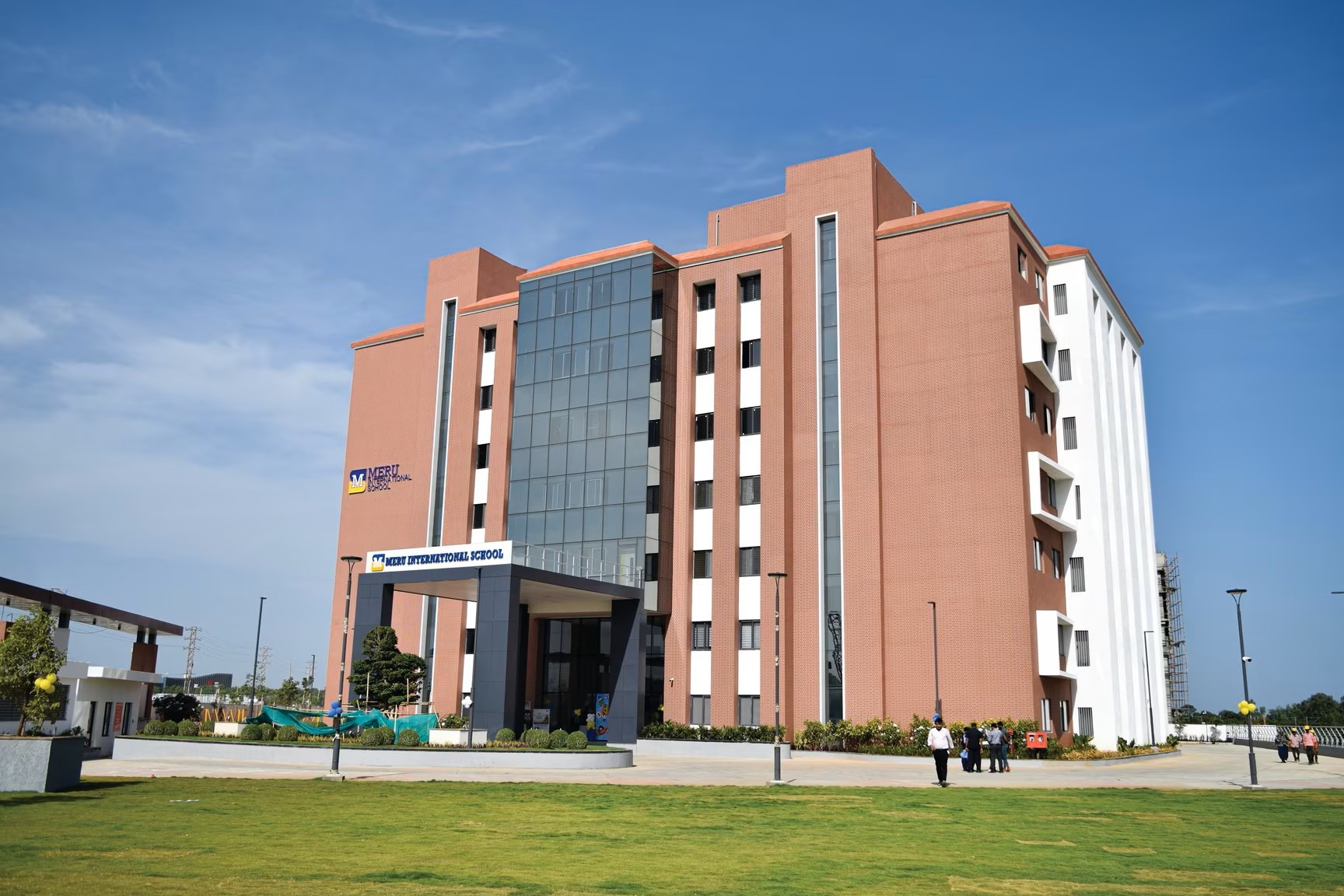
Type: International school Board: CBSE and international frameworks Student population: 900+ Implementation: Cypher, Morpheus, Zion, NEO AI Innovation Lab Implementation duration: 12 months
Meru International School approached AI implementation with a specific institutional goal: to establish a differentiated position in the Raipur education market as a school that prepares students not just for board examinations but for the AI-shaped professional landscape they will enter. This goal shaped every implementation decision.
The NEO AI Innovation Lab was central to the implementation from the beginning, not an add-on to the core platform. The school identified a cohort of students in Grades 7 through 10 who showed strong intellectual curiosity and enrolled them in the NEO curriculum alongside the full school deployment of Cypher and Zion. The NEO students became internal ambassadors: their projects, their research, and their competition participation were visible to the wider school community and created aspirational pressure from students who wanted access to the same opportunities.
The innovation head at Meru described the NEO deployment as the element of the implementation that most surprised them: "We expected students to be engaged. We did not expect them to take ownership of the lab in the way that they did. Within two terms, students were coming to the lab independently, working on projects that were entirely self-directed. The curriculum gave them the structure. The curiosity was entirely theirs."
Student outcomes at Meru International confirmed the pattern seen across AI Ready School implementations: the improvement in higher-order cognitive tasks consistently exceeded the improvement in recall and reproduction tasks. Students who were given AI tools designed to make them think rather than to give them answers developed analytical capabilities at a rate that surprised teachers who had assessed them as capable but not exceptional.
The Zion Creative Hub produced the most visible change in student output quality. Teachers who had been teaching the same students for years described seeing entirely new dimensions of their students' thinking through the creative and research work the platform enabled. Students who had always seemed disengaged in traditional written formats produced film projects, research papers, and open-source applications that demonstrated analytical sophistication that no written examination had ever surfaced.
The NEO lab should not be positioned as a program for exceptional students. The students who benefited most from NEO at Meru International were not always the students the school had identified as highest performing on conventional measures. Some of the strongest NEO outcomes came from students who had been chronically underperforming on traditional assessments and who, in the NEO context, discovered that their intelligence expressed itself in ways that traditional schooling had never valued or measured. Position NEO as an opportunity for every student who wants it. You will be surprised by who rises.

Type: Progressive private school Board: CBSE Student population: 600+ Implementation: Cypher, Morpheus, Zion Implementation duration: 10 months
The Aarambh School's implementation was distinctive in one specific way: the principal made the decision that parent communication would be a central element of the implementation strategy from day one, not an afterthought. Before students began using Cypher, the school ran three parent information sessions explaining what AI-powered learning was, what it was not, and specifically how the school had designed its implementation to develop independent thinking rather than create dependency.
This front-loaded parent communication had two effects. First, it gave parents a framework for understanding the change their children were experiencing, which reduced the anxious questions that schools typically receive when any significant educational change is introduced. Second, and more importantly, it created a group of informed parent advocates who could explain the school's AI approach accurately to other parents in their networks.
The school's director described the parent communication strategy this way: "We were asking parents to trust us with something unfamiliar. The respectful thing to do was to explain what we were doing and why before we did it rather than after we had already done it. The parents who understood the philosophy became our most effective advocates in the community."
The most notable finding at The Aarambh School was the impact of Cypher's gap detection on the school's understanding of its own student population. The Morpheus monitoring dashboard surfaced a significant number of students whose classroom performance and examination scores had been consistently mid-range but who, in Cypher interaction data, showed conceptual gaps that were specific, addressable, and in several cases traceable to specific misconceptions that had been forming undetected for multiple academic years.
The academic coordinator described the experience: "We thought we knew our students. We had been teaching them for years. What the dashboard showed us was that knowing a student's score is not the same as knowing a student's understanding. We found students who had been working around gaps for so long that neither they nor their teachers knew the gaps were there."
The parent satisfaction data was also notable. Parent survey scores on the question "I have a clear picture of how my child is learning" improved by 34 percentage points in the first term of implementation, driven primarily by the increase in specific, real-time learning information available to parents through the platform.
Invest in parent communication before you begin, not after problems arise. The schools that experience the most friction during AI implementation are almost always the ones that did not prepare their parent communities adequately. Parents are not resistant to AI in education. They are resistant to change they do not understand. The difference is addressable with one or two well-designed information sessions before the implementation launches.

Type: Private international-affiliated school Board: CBSE Student population: 1,100+ Implementation: Cypher, Morpheus, Zion, NEO AI Innovation Lab Implementation duration: 11 months
Adarsh International School's implementation was characterised by an unusually rigorous approach to measuring outcomes from the beginning. Before the implementation launched, the school established a baseline assessment framework: specific learning outcomes that would be measured before and after implementation, specific teacher productivity metrics that would be tracked, and specific parent satisfaction indicators that would be surveyed. The implementation was treated from the outset as an evidence-generating exercise, not just a product deployment.
This measurement orientation produced two benefits. First, it created accountability for the implementation that kept both the school leadership and the AI Ready School implementation team focused on outcomes rather than activity. Second, it produced documentation that the school could use with its board, with its parent community, and with prospective families considering the school.
The school's leadership described the measurement approach as foundational to the implementation's success: "We were making a significant investment. We needed to know whether it was working, specifically and verifiably. The measurement framework we established before we began was the reason we were able to give our board a clear, evidence-based account of outcomes at the end of the first year."
The Adarsh International implementation produced outcomes consistent with the broader AI Ready School portfolio, with particular strength in the skills development dimension. Students in Grades 8 through 10 who engaged most deeply with Zion's Project Hub showed measurable improvement in analytical communication skills, which the school's assessment coordinator described as the gap most consistently identified in student portfolios before implementation.
The NEO AI Innovation Lab produced Adarsh International's most visible external outcome: two student teams from the school participated in the AI Startup Show Juniors competition, with one team reaching the national finals. The school's innovation head described the competition experience as transformative for the students involved: "These were students who had always been told they were smart. The competition was the first time their smartness had been tested by people who had no reason to be kind about it. They came back from that experience different. More confident, but also more precise about what they actually knew and what they still needed to learn."
Establish your measurement framework before you begin, not after you have results to explain. The schools that can demonstrate AI implementation outcomes most compellingly to their boards and parent communities are the schools that measured from day one. A 34% improvement in a metric you defined before the implementation is a result. A 34% improvement in a metric you identified after the implementation is a claim. Boards and parents know the difference.

Type: Private CBSE school with global curriculum orientation Board: CBSE Student population: 800+ Implementation: Cypher, Morpheus, Zion, NEO AI Innovation Lab Implementation duration: 9 months
Brahmvid The Global School's implementation was distinguished by the depth of its NEO AI Innovation Lab deployment. Where other schools introduced NEO as a program running alongside the core platform, Brahmvid integrated NEO into the school's core identity proposition from the outset. The NEO lab was designed not as an extracurricular program but as a central expression of the school's educational philosophy: that students who understand technology, rather than simply using it, are the students who will lead in the world that technology is shaping.
The principal described the philosophy behind this positioning: "We did not want students to leave our school having learned to use AI tools efficiently. We wanted them to leave having developed the capacity to understand AI systems, evaluate them critically, build with them, and direct them. That is a different educational outcome, and it requires a different educational environment. NEO is that environment."
The school invested in an on-campus NEO mentor, trained by AI Ready School, who works with students on their research projects and open-source builds. The mentor's role is not to teach content but to ask the questions that move a student's project from interesting to rigorous: what would have to be true for your hypothesis to be wrong? What assumptions is your model making? Who would be harmed by a system like this if it were deployed at scale?
Shaurya Agrawal, a Grade 8 student at Brahmvid, described his experience in terms that captured the core educational goal of the NEO program: "I thought AI was just for getting answers. After using the Project Hub for three months, I built my first app — it identifies plants from photos. I understand now how AI actually functions. That is completely different from just using it."
The school's academic results in the first three terms of implementation showed the pattern consistent across AI Ready School implementations: stronger improvement in higher-order cognitive tasks than in recall tasks. But the most significant outcome at Brahmvid was not in examination scores. It was in the visibility of student capability that had previously been invisible. Students who had been characterised by their teachers as capable but unmotivated were, in the NEO context, producing research and building projects that demonstrated both motivation and capability at levels their teachers had not observed before.
Give students a reason to go deeper than the curriculum requires. The most powerful driver of genuine AI-Sense development at Brahmvid was not the curriculum content. It was the competitions, the public portfolio building, and the on-campus mentor who asked questions that required precision. Students will go further than you expect if you give them a context that makes going further matter. Competition entry dates, portfolio deadlines, and a mentor who takes their work seriously are more powerful motivators than any curriculum requirement.
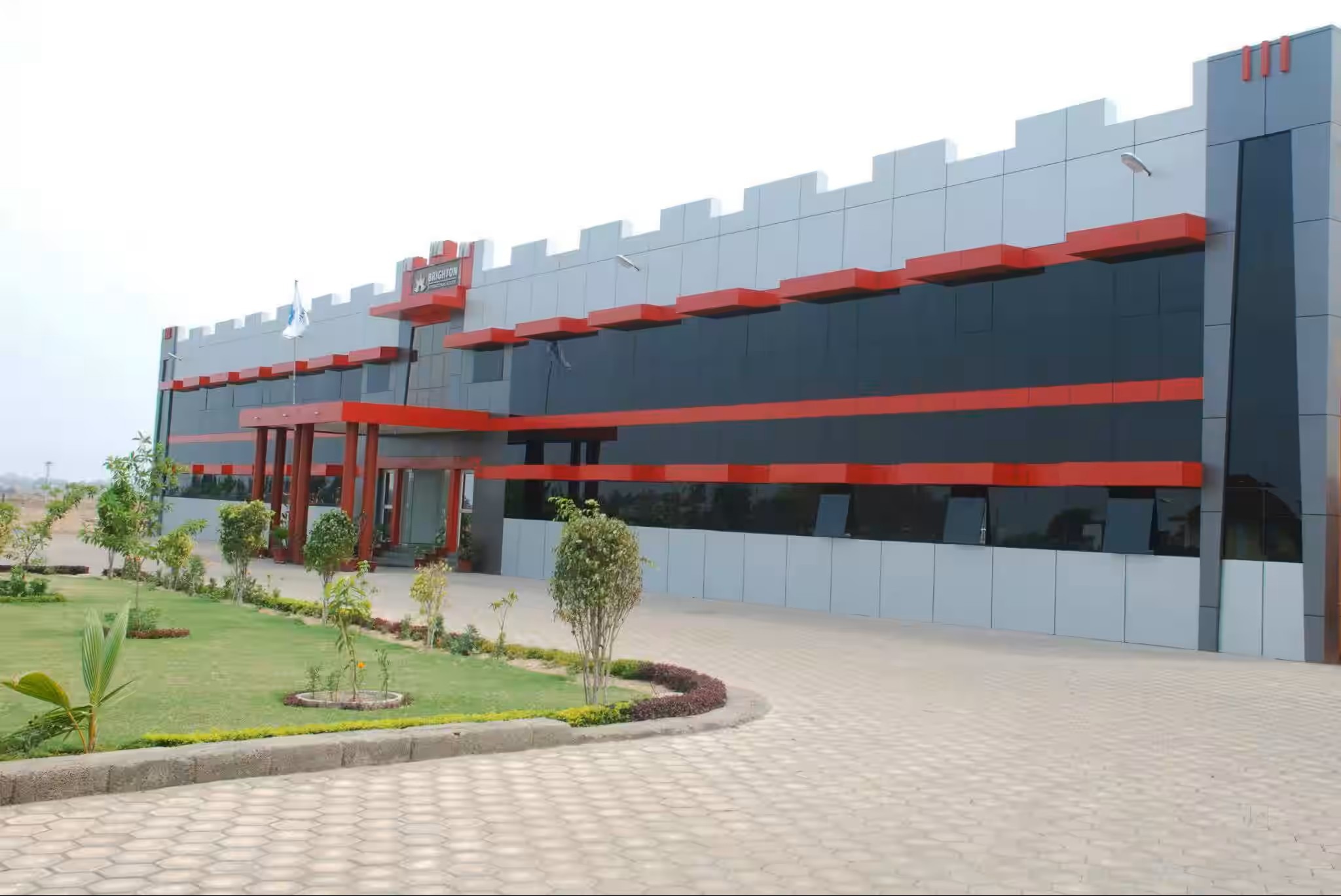
Type: International school Board: CBSE with international curriculum elements Student population: 1,000+ Implementation: Cypher, Morpheus, Zion Implementation duration: 13 months
Brighton International School's implementation was notable for the specific attention it gave to the challenge that most schools underestimate: the transition from implementation as a project to implementation as part of how the school permanently operates.
The school's leadership described the challenge this way: "The first three months of any implementation are driven by momentum. Someone has made a decision, resources have been committed, there is attention and energy. The harder question is what happens in month seven, when the initial momentum has faded, some teachers have developed strong practice and others are still struggling, and the leadership's attention has moved to other priorities. That is the phase where implementations quietly die."
Brighton International addressed this by establishing what they called an AI Practice Community: a monthly meeting of the teachers most deeply engaged with the platform, facilitated by the school's AI coordinator, focused specifically on sharing what was working, identifying what was not, and designing adaptations. The AI Practice Community was not a training session. It was a peer learning forum where implementation problems were treated as interesting challenges rather than failures, and where the most experienced users became internal resources for colleagues who were still developing confidence.
The AI Practice Community produced an unexpected outcome: it became a significant driver of teacher professional satisfaction. The teachers involved described it as one of the few professional development contexts they had encountered where the conversation was genuinely useful rather than generically supportive. Jayesh Agrawal's description of the before-and-after experience was direct: "Before Zion, I had students using five different tools for a single project. By the time they pulled everything together, half the class had lost track of what they were doing. Now everything is in one place and I can see what each student is actually building." The consolidated platform eliminated the coordination cost that had been consuming teacher attention.
The monitoring data from Brighton International showed the same pattern of surprise at what the data revealed that other schools reported. Teachers who had assessed specific students as average consistently found that the Morpheus monitoring dashboard showed patterns of curiosity and engagement in self-directed Cypher interactions that the classroom context had never surfaced. The student who is quiet in a class of 40 is not necessarily less engaged than the student who speaks frequently. The data often showed the opposite.
Build a structure for sustaining implementation before the initial momentum fades. Every implementation has a honeymoon phase. The schools that maintain and deepen implementation quality after that phase are the ones that built institutional infrastructure — an AI coordinator, a peer learning community, regular outcome reviews — during the honeymoon phase when energy was high. Do not wait for implementation fatigue to develop structures that prevent it. Build them while the implementation is still exciting.
Across seven schools in different contexts with different student populations under different boards with different resource levels, several patterns repeat with enough consistency to be worth naming explicitly.
They all started smaller than they wanted to. Every school in this group resisted the temptation to deploy the platform across all students and all teachers simultaneously in the first term. They identified a focused cohort, built capability and confidence within that cohort, and let organic adoption drive expansion. The schools that have attempted full-deployment launches in the AI Ready School portfolio have consistently produced lower outcomes than the schools that built from a focused start.
They all treated teacher empowerment as the prerequisite for student outcomes. In every case, the sequence was teacher readiness first, student access second. The schools that reversed this sequence — deploying student-facing tools before teachers had genuine platform competency — found that teacher anxiety about not understanding what students were doing undermined the implementation before student outcomes had time to develop.
They all measured from the beginning. Not always with the rigour of Adarsh International's formal framework, but always with a clear sense of what they were trying to achieve and whether they were achieving it. The schools that could articulate specific, measured outcomes at the end of Year 1 were the schools that had defined those outcomes at the beginning of Year 1.
They all encountered the same surprise. Every school in this group described a version of the same experience: the Morpheus monitoring dashboard revealed patterns in student learning, engagement, and capability that the school's existing assessment systems had never surfaced. The student whose potential had been invisible because the format that tests it had never been used. The student whose gradual disengagement had been masked by stable examination scores. The student with a foundational gap from three years ago that was now compounding silently. AI-powered visibility is consistently more revealing than schools expect, and consistently more actionable.
They all found that the students who benefited most were not always the ones they expected. The highest-performing students on conventional measures did not always show the greatest improvement. The students who showed the greatest transformation were often the ones whose intelligence had been invisible to traditional assessment — the student who thinks in films, the student who builds rather than writes, the student whose curiosity runs in directions the curriculum had never offered. AI-Sense development is not a program for exceptional students. It is a program that reveals which students are exceptional in ways the school had never looked for.
The seven school leaders featured in this blog were each asked what they would tell a principal who called them tomorrow to ask for honest advice about starting an AI implementation. The consensus across their answers, expressed in different words by different people in different contexts, was this:
The technology is not the hard part. The technology works. The hard part is the human infrastructure — the teacher who becomes the internal champion, the parent community that understands what is happening and why, the measurement framework that makes outcomes visible, the peer learning structure that sustains momentum when the initial excitement fades. Every school that is getting AI right has built this human infrastructure. Every school that has struggled has underestimated it.
Start smaller than you think you should. Build teacher confidence before you introduce student access. Measure from day one. Communicate with parents before problems arise. Build a structure for sustaining the implementation before the honeymoon phase ends. And call a school that has already done it before you start — because the most valuable thing one school can give another is an honest account of the journey, including the parts that were harder than expected.
The schools getting AI right are not the schools with the biggest budgets or the most advanced technology. They are the schools that treated implementation as a human challenge that technology enables, not a technology challenge that humans adapt to.
AI Ready School has active implementations across India and internationally, with documented outcomes across government schools, private CBSE schools, international schools, and school networks. The complete ecosystem includes Cypher (personalised learning companion), Morpheus (AI teaching agent), Zion (30+ AI tools), NEO (AI Innovation Labs), and Matrix (sovereign AI infrastructure).
To join our school partner network and connect with the schools featured in this blog, reach out at hey@aireadyschool.com or call +91 9100013885.
Join Our School Partner Network
Human First. AI Next.™

.png)