
Chiranjeevi Maddala
August 12, 2026
Case Study · Pilot Program · Dehradun, Uttarakhand · 30 July – 1 August 2026
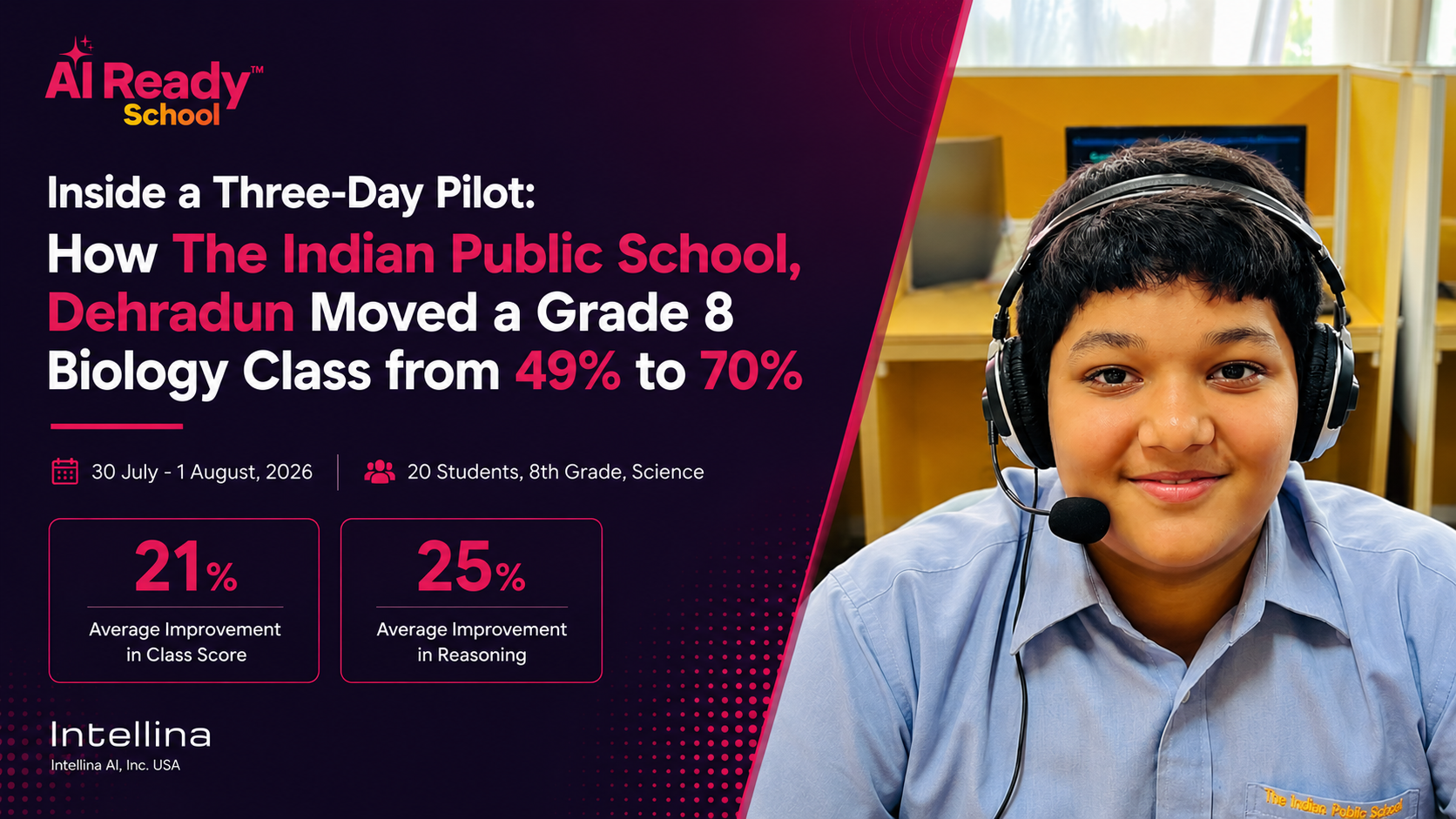
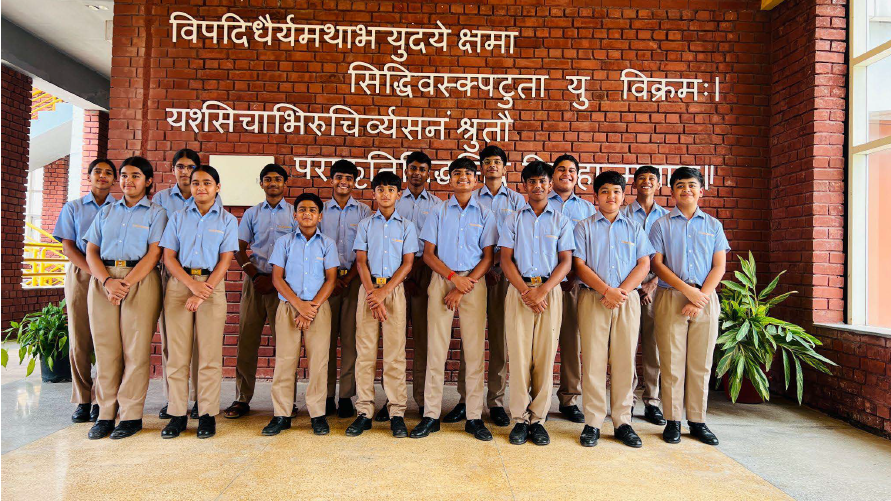
Twenty Grade 8 students, one Biology lesson, and three days — that was the entire footprint of the pilot at The Indian Public School (TIPS), Dehradun. What came out of it was a class-wide score jump from 49% to 70%, a parallel rise in how confidently students reasoned through the material, and a set of misconceptions the platform surfaced with a precision no single teacher grading twenty papers by hand could match. This post walks through the full pilot report — every number, every table, and the story behind them.
AI Ready School (AIRS) is a complete AI ecosystem for K-12 schools, built on five components: Cypher (personal AI learning companion), Morpheus (AI teaching agent), Zion (safe AI tool suite), NEO (AI Center of Excellence lab), and Matrix (local AI infrastructure) — spanning academics, skills, operations, safety, and future-readiness.
Our platform has already been running at Meru International School, Hyderabad, across two branches, delivering regular classes with minimal guidance from teachers over the past 1.5 years. Pilots like the one at TIPS exist so a new school can experience Morpheus and Cypher directly, under real classroom conditions, before deciding to adopt them. The goal isn't to replace the teacher — we believe the teacher should stay at the center of the process — but to hand them a well-integrated set of tools that carries the end-to-end work of teaching without dulling the critical thinking or creativity of either the teacher or the student.
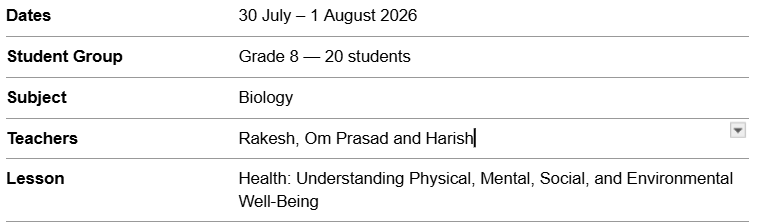
The design was deliberately simple: a baseline test on the lesson, a teacher-built lesson using Morpheus, the lesson assigned to students, students learning the topic through Morpheus and Cypher, and finally a final test on the same material, with the difference measured at every step.
Two questions sat behind the whole exercise. First, how much faster can a teacher prepare, deliver, test, and track a lesson with AIRS in the loop versus without it? Second, how much further do students progress with platform-driven reinforcement layered on top of what the teacher delivers, compared with the teacher's instruction alone? Everything below is the answer, drawn directly from the pilot and class assessment reports generated at the end of the three days.

In three days and a single lesson, AIRS lifted class-wide biology scores from 49% to 70% — a +21 point gain — while students rated their experience 4.8 out of 5 and reasoning confidence rose sharply alongside accuracy, a strong signal that the gains reflect real understanding rather than guesswork.
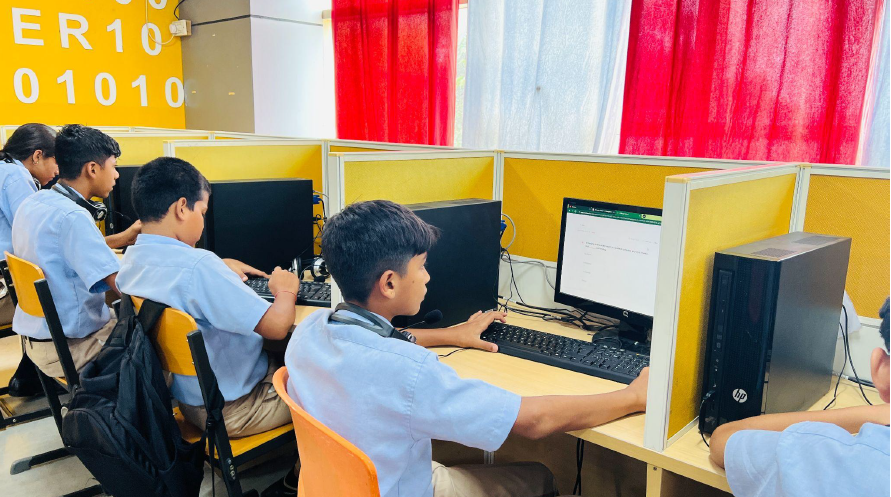
The class-wide average rose 21 percentage points across the pilot window — from 49% on the baseline to 70% on the final assessment. Of the twenty students, fifteen improved, one held steady, and four declined slightly. That last group isn't hidden in the aggregate number here; the platform names them specifically later in this post, alongside what likely went wrong for each.
One detail stood out in the timing data: students took slightly longer on the final assessment than on the baseline — 19m 46s up to 22m 41s, almost three minutes more. On its own that could read as a bad sign, slower being interpreted as less confident. Paired with the jump in reasoning confidence below, though, it reads the opposite way — students were working through problems more deliberately rather than rushing to finish, and taking the extra time paid off in accuracy.

Score gains only tell part of the story, because a score alone can hide a lucky guess. AIRS also measures reasoning confidence — whether a student's correct answer is backed by genuine understanding or by chance. If accuracy had risen without a matching rise in reasoning confidence, that would have been a warning sign that students memorized answer patterns rather than the underlying biology. That isn't what happened here.
Reasoning confidence rose from 30/100 to 55/100 — a +25 point change, tracking almost exactly with the +21 point rise in accuracy. Nine students landed in the "correct but weak reasoning" band, a group worth watching closely on the next assessment even though their answers were right this time.
Where students excelled
• Vaccines protect the body from disease — 83%
• Health as complete physical, mental, and social well-being — 78%
• Disease as a condition and chronic disease — 65%
Where AIRS flagged opportunities for reteaching
• Antibiotic resistance — 29%
• Communicable disease vectors and the malaria pathogen — 44%
• Natural body defense and immunity — 55%
This is the part of the pilot the teachers responded to most strongly. Rather than handing back a single opaque score per student, AIRS traced individual wrong answers back to the specific misconception behind them — turning "this student got a 60%" into "this student believes a vector directly causes the disease, rather than carrying the pathogen that does." Across the class, six distinct misconceptions surfaced clearly enough to name:
• "A vector directly causes the disease" — 5 students
• "Antibiotics work against viruses" — 3 students
• "Antibiotics are effective against all pathogens" — 3 students
• "Malaria is caused by bacteria" — 2 students
• "Chronic disease means a nutrient deficiency" — 2 students
• "Sugar directly causes diabetes" — 2 students
These insights translated directly into a teacher recommendation: reteach antibiotic resistance, acquired immunity, and when antibiotics work, using a cause-and-effect comparison chart, followed by a sorting activity matching bacteria, virus, and fungus examples to the correct treatment and explanation — turning assessment data into a concrete next lesson, automatically.
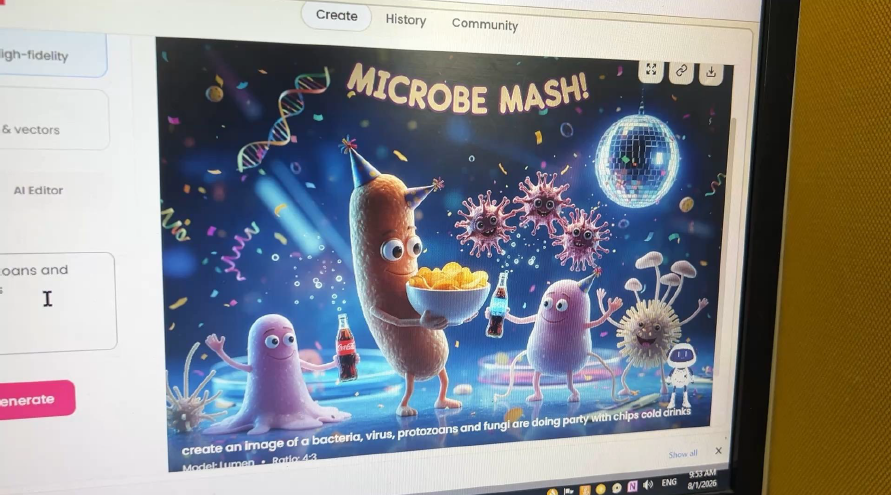
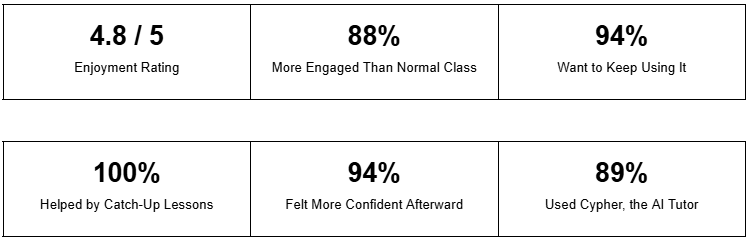
Numbers on a dashboard are one thing; what students actually felt during the three days is another, and it's the part of this pilot that's easiest to lose in a report full of percentages. Students didn't just score better — they engaged more, and said so directly. Eighteen of twenty students responded to the end-of-pilot survey, and the picture they painted was consistent across almost every question.
What students valued
• Cypher gave helpful hints and accurate answers rather than handing over answers outright
• The image generator was a standout favorite
• Videos and slides made difficult content easier to understand
• Interactive elements made the lesson feel enjoyable rather than routine
• Quiz results and explanations helped them see and fix their own mistakes
94% of students said they did better on the final assessment than the baseline — and 100% said a catch-up mini-lesson helped when they were struggling.
A minority of students pushed back in useful ways rather than simply praising the platform: 2 of 18 asked for harder questions, and a few noted that video playback speed made some content harder to follow. Both are easy adjustments for the next pilot, and both are the kind of specific, actionable feedback the survey was designed to surface rather than a generic satisfaction score.
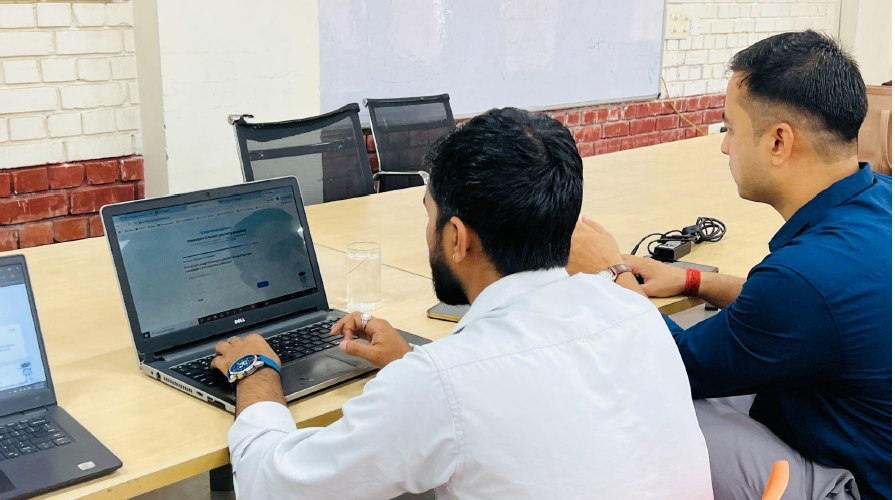
If the student data shows engagement, the teacher data shows trust — and trust from a teacher who has to stand in front of the class and answer for what the AI produced is a harder thing to earn than enthusiasm from a student trying a new app.
The two participating teachers rated their overall experience a perfect 5.0 out of 5, scoring lesson accuracy, curriculum alignment, ease of use, AI-generated content quality, and Agent-mode reliability all 5/5. Live Classroom Control's screen-sync during teach-mode instruction also scored a full 5/5, and both teachers reported saving under 30 minutes of prep time per lesson relative to planning without AIRS.
What stood out most: unlike some earlier AIRS pilots at other schools, where teachers routinely edited AI-built interventions before sending them to students, both teachers here trusted Morpheus's auto-built interventions as-is — rating their quality 5/5 and their impact on struggling students "clearly" helpful, without stepping in to rewrite them first. The one area rated slightly lower was Cypher staying strictly on-topic, at 4.5/5 — still strong, and worth continued monitoring as usage scales beyond a single class of twenty.
Both teachers said they would "definitely" keep using Morpheus after the pilot and gave it a 10 out of 10 on likelihood to recommend to another teacher — the maximum possible score on that question.
The headline ratings above come from a much longer survey that walked both teachers and students through every stage of the platform — creating lessons, enriching them, assigning and pacing, live classroom control, tracking, and support. The detail underneath the averages is where most of the operational learning for the next pilot actually sits.
A. Creating & enriching lessons (teachers)
• Both teachers built lessons by AI-generating from a topic rather than starting from a blank page
• First draft from Morpheus rated 5/5 — classroom-ready with only "moderate" editing required
• AI-generated slides, glossary, flashcards, and visualizations rated 5/5 as good enough to use as-is
• Agent-mode requests ("add a quiz," "make it more hands-on") worked reliably, rated 5/5
B. Assigning, pacing & live classroom control (teachers)
• Assigning lessons to students rated 5/5 for ease
• Session Flow locks (in-order unlock, locked assessments, Cypher time limits) were used and rated useful
• Edits to an assigned lesson pushed through reliably to students every time
• Both teachers taught live using Classroom Control, and student screens stayed in sync during Teach mode (5/5)
C. Tracking, dashboard & interventions (teachers)
• Visibility into each student's scores, doubts, and analysis rated 5/5 for clarity
• "Mark as Doubt" flags were very useful for spotting where students got stuck
• Reading students' Cypher chat threads was useful for understanding their struggles
• Auto-built interventions rated 5/5 for relevance and "clearly" helped struggling students catch up
D. Getting around & Cypher (students)
• Finding and opening lessons rated 4.6/5 for ease
• 56% of students learned using both the Learn page and Cypher together; 33% leaned mainly on Cypher
• 82% said Cypher explained things in a way they understood; 82% said it never gave a wrong or confusing answer
• 89% said chatting with Cypher felt like having a helpful tutor
E. Lessons, quizzes & catch-up (students)
• 100% found the lessons interesting to work through; videos were the most-used content type (94%)
• 88% said the lesson felt "much more engaging" than a normal class
• 94% said quiz scores and explanations helped them understand and fix their own mistakes
• 100% of students who got a catch-up mini-lesson said it helped
F. When students got stuck
• 56% used "Mark as Doubt" when confused; 100% said it was easy to get help, either from Cypher or by raising a hand
• 94% said Morpheus made them feel more confident about the subject; only 1 student said it felt the same as before
• 94% of students said they'd want to keep using the platform going forward
The written feedback underneath these numbers was consistent: students called out Cypher's hints, the image generator, and the videos and slides by name as what they valued most, and their concerns were narrow and practical — video speed, and a request for harder questions — rather than anything structural.
Averages can flatter or hide a class. The class assessment report behind this pilot breaks results down to every individual student — baseline, final, growth, and lesson completion — giving teachers a starting roster for who needs support first, rather than a single number to react to.
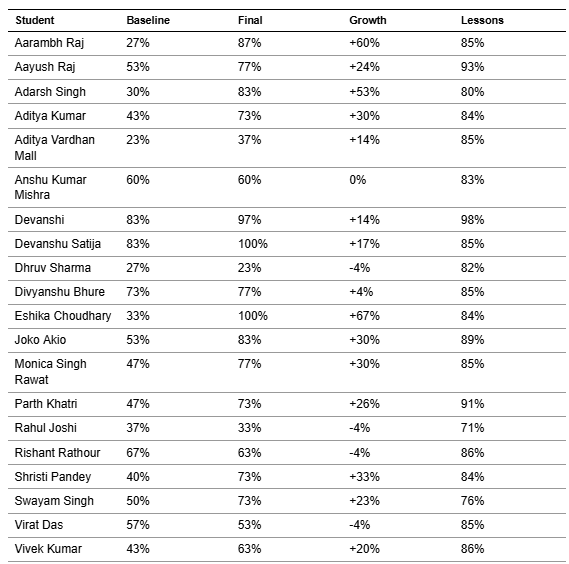
Top improvers: Eshika Choudhary (+67%), Aarambh Raj (+60%), and Adarsh Singh (+53%) — all three came in well below the class baseline and closed most of the gap in three days. Flagged for attention: Dhruv Sharma, Rahul Joshi, Aditya Vardhan Mall, Anshu Kumar Mishra, Rishant Rathour, and Virat Das. Several of this group answered faster on the final test without a matching accuracy gain — Rahul Joshi's pace improved from 180s per question to 42s, yet his score fell from 37% to 33%; Dhruv Sharma sped up from 103s to 56s per question and dropped from 27% to 23%. AIRS flags this pattern specifically, since raw speed on a retake can look like progress while actually signaling disengagement or guessing.
Beyond scores, AIRS builds a class-level learning profile from Cypher chat activity — 34 chats, 173 messages, and 45m 33s of tutoring time across the pilot — a cognitive and behavioral picture no single test captures. The platform's own read of this class: it thrives on exploratory learning, favors real-world examples to deepen understanding, prefers a moderate pace, and often seeks guided help rather than working entirely independently — a class comfortable with structure, not one that wants to be left alone with the material.
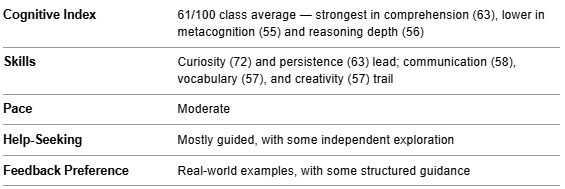
AIRS's recommendation for this class, generated automatically from the chat and assessment data: lean on real-world case studies and project-based work, keep feedback structured and actionable rather than open-ended, and build in more opportunities for creative expression — presentations, art, group debate — to lift the communication and critical-thinking scores that lag behind curiosity and persistence.
A +21 point gain in overall class progress, a +25 point gain in reasoning confidence, and a 4.8/5 student experience rating — all from a single lesson delivered inside a standard three-day window — is one of the strongest early signals AIRS has produced to date. Any one of those numbers alone could be a fluke of a small sample size. Together, they tell a more specific story: students didn't just answer more questions correctly, they answered them with more conviction, and they said so unprompted in a survey with no incentive to flatter the platform.
What makes this pilot different from a generic "AI improved test scores" result is the specificity underneath it. AIRS doesn't just move a class average — it tells a teacher exactly which misconceptions to reteach, names the six students who need a different kind of follow-up than the fifteen who improved, and builds a class-level learning profile that shapes how the next lesson should be taught before that lesson is even written. That's the difference between a platform that reports on learning and one that actively closes the loop on it.
It also lines up with what we've already seen at scale: AIRS has been running at Meru International School, Hyderabad across two branches for the past 1.5 years, delivering regular classes with minimal teacher guidance. The TIPS pilot is early evidence that the same pattern — strong gains, high trust from teachers, high engagement from students — holds up in a brand-new school encountering the platform for the first time, not just one that has had a year and a half to adapt to it.
This case study is one part of a five-product ecosystem — Cypher, Morpheus, Zion, NEO, and Matrix — spanning academics, skills, operations, safety, and future-readiness across a school. TIPS, Dehradun saw one slice of it, in one class, over three days. The results above are what that slice looked like end to end.
See These Results in Your Own Classroom — Free
TIPS, Dehradun didn't pay to find out what AIRS could do — they ran a free 3-day pilot and let the results speak. We're extending the same offer to your school: pick one class, one subject, and one lesson, and we'll run the full baseline-to-final cycle with your teachers and students at no cost.
What's included in your free 3-day pilot:
• A baseline test, an AI-built lesson delivered through Morpheus and Cypher, and a final test — same design as the TIPS pilot above
• A full class assessment report: student-by-student growth, surfaced misconceptions, and a Cypher-based class learning profile
• Direct teacher and student feedback surveys, so your staff — not just a vendor deck — decides if it's working
• No cost, no obligation to continue — plus 2 free months of platform access if you choose to move forward
Book your free pilot program, or contact us directly — most schools go from first conversation to pilot week in under two weeks.
Human First. AI Next.™