
Chiranjeevi Maddala
April 23, 2026
The National Education Policy 2020 is the most comprehensive reimagining of Indian education in four decades. It calls for competency-based learning, formative assessment, multidisciplinary thinking, and technology integration at scale. Most schools are trying to implement it. Almost none of them realise that a well-designed AI platform already is.
When NEP 2020 was released, it came with 484 pages of vision, philosophy, and policy direction. School leaders were handed the document and asked to implement a transformation that previous generations of policymakers had been unable to achieve. The intentions were serious. The challenges were significant. The gap between what the policy described and what schools could practically deliver was, in many cases, enormous.
Four years later, that gap is still the defining challenge of NEP implementation. Schools are trying. Curriculum teams are working. Teachers are being trained. But the systemic changes that NEP 2020 demands — genuine competency-based assessment, continuous formative evaluation, personalised learning pathways, AI and computational thinking from Class 3 — require infrastructure and capability that most schools do not yet have.
Here is what most school leaders have not yet recognised: a well-designed AI platform does not just support NEP implementation. It operationalises it. The mandates that NEP 2020 requires — and that schools are struggling to deliver through manual effort alone — are precisely what thoughtfully designed AI makes achievable at scale, for every student, in every class, every day.
This blog maps AI Ready School's products to the specific NEP 2020 mandates they implement. It is not a marketing exercise. It is a practical guide for school leaders who are trying to understand how AI adoption and NEP compliance relate to each other — and who want a clearer picture of what genuine alignment looks like versus what cosmetic compliance looks like.
The mapping is specific. For each NEP mandate, we identify what the policy requires, why it is difficult to implement without technological support, and how AI Ready School's platform delivers it — with reference to the specific products, features, and evidence involved.
NEP 2020 describes the school India's children deserve. AI Ready School builds the infrastructure to deliver it. The alignment is not coincidental. It is the reason we built what we built.
Before mapping AI to NEP mandates, it is worth being honest about why NEP implementation has been slow. The policy is ambitious because it correctly identifies what was wrong with the previous system: over-reliance on rote memorisation and examination performance, inadequate attention to higher-order thinking and competency development, insufficient personalisation, limited technology integration, and a curriculum that prepared students for a world that no longer exists.
The problem is that implementing the solutions NEP proposes requires capabilities that most schools cannot develop through good intentions and teacher effort alone. Genuine competency-based assessment requires continuous data collection and analysis at a scale no human teacher can manage for 40 students simultaneously. Personalised learning requires a persistent, accurate model of each student's understanding that updates continuously. Formative assessment requires feedback loops that close within the learning cycle, not weeks after the fact. AI and computational thinking education requires both infrastructure and curriculum that most schools have never had.
These are not failures of will. They are failures of infrastructure. And infrastructure is exactly what AI provides. The mandates that NEP describes and that schools are struggling to implement are, with the right AI platform, achievable at scale. Here is the mapping.
NEP 2020 Mandate 1 | NCF-SE 2023, Para 4.2 and Chapter 5:
Competency-Based Learning: Shift from rote memorisation to development of genuine competencies — knowledge application, critical thinking, creative problem-solving, and collaborative skills.
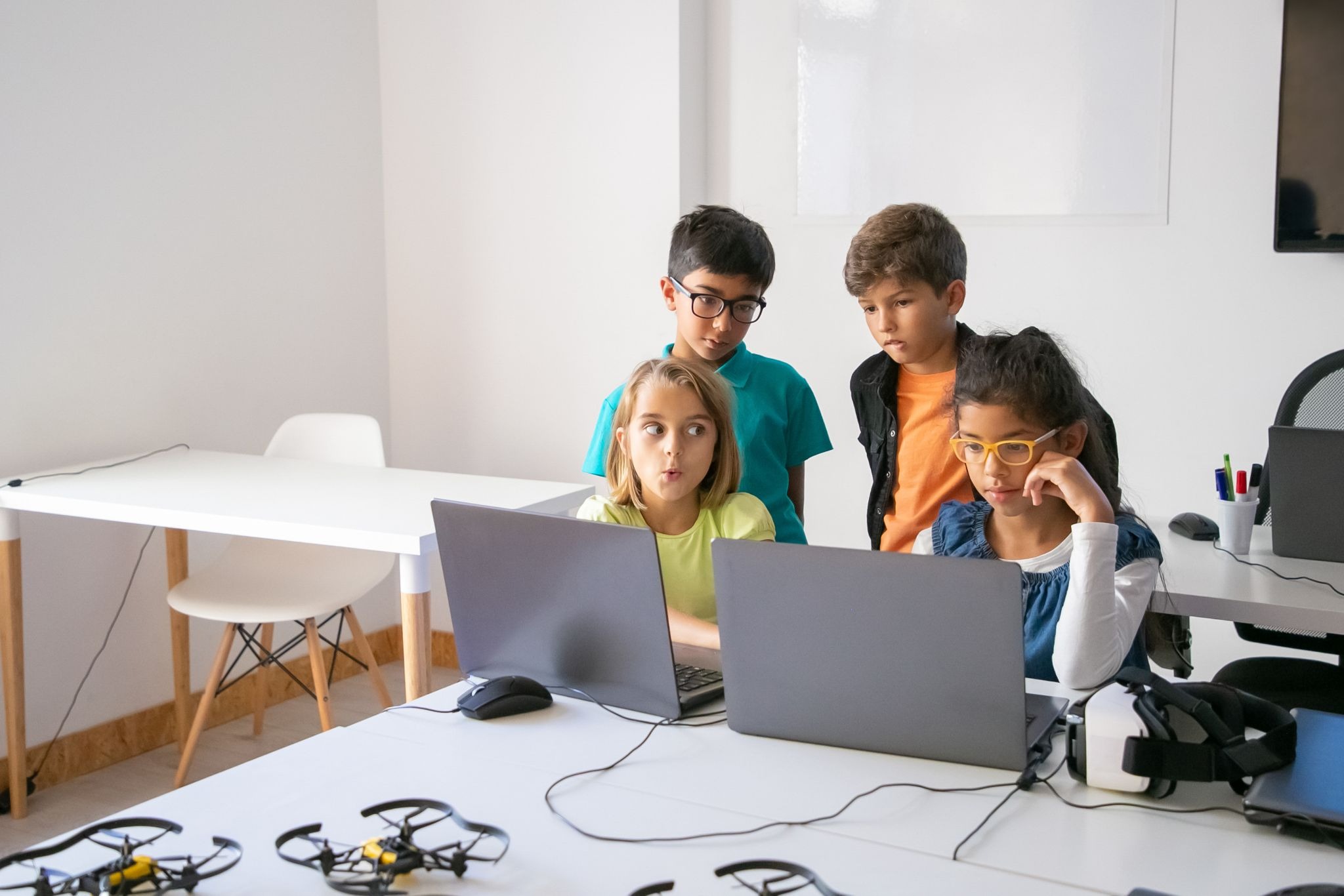
NEP 2020 and the National Curriculum Framework for School Education 2023 are explicit that the goal of education is not content knowledge but genuine competency — the ability to use knowledge in real contexts, apply it to new problems, and build on it across disciplines. This is not a philosophical aspiration. It is a specific assessment and pedagogy requirement that PARAKH (the national assessment body) is building into India's evaluation frameworks.
The challenge is that competency-based learning is difficult to deliver in a classroom where one teacher is responsible for 40 students at different competency levels across the same curriculum. A teacher who wants to develop application-level thinking in every student simultaneously cannot personalise instruction to 40 different starting points. They inevitably teach to the middle and hope the rest follows.
How AI Ready School implements this: Cypher's 360-degree student profile tracks four competency dimensions continuously: Knowledge (depth, connectivity, stability), Learning Style (what approach works for this student on this concept), Cognitive Behaviour (persistence, curiosity, self-monitoring), and Skills (analytical, communication, creative, collaborative). Every Cypher interaction is calibrated to develop these competencies, not just deliver content. The Raipur implementation produced a 77% improvement in analysis-level cognitive tasks — the direct measurement of competency development rather than content recall.
The Zion platform's five hubs develop competencies through doing rather than learning about. The Research Hub develops analytical skills through structured research methodology. The Project Hub develops creative and collaborative skills through real AI project construction. The Career Hub connects competency development to future-readiness. Every hub generates signals that feed into the student's competency profile — creating the continuous, multi-dimensional competency tracking that NEP mandates but that manual systems cannot deliver.
NEP 2020 Mandate 2 | NEP 2020 Section 4.40 and NCF-SE Assessment Chapter
Formative Assessment Over Summative: Shift emphasis from high-stakes board examinations to continuous, formative assessment that informs teaching and supports learning.
This is perhaps the most significant shift NEP 2020 calls for — and the one with the largest gap between policy intent and classroom reality. The policy is clear that assessment should primarily serve learning, not merely certify it. Students should receive regular, specific feedback that helps them understand where they are, what they need to develop, and how to get there. Teachers should have access to assessment data that informs their next instructional decision, not just their end-of-term report.
The practical problem is time. Creating quality formative assessments takes significantly longer than creating recall-based tests. Evaluating formative assessment responses requires more judgment than marking correct/incorrect answers. Providing specific, actionable feedback to 40 students is a different task from returning a scored paper. Under current conditions, most teachers default to summative assessment not because they prefer it but because formative assessment at quality takes more time than they have.
How AI Ready School implements this: Morpheus generates complete assessment packages at three Bloom's Taxonomy levels — Recall, Application, and Analysis — in under three minutes. The teacher reviews, modifies, and approves. The assessment questions are calibrated to the specific chapter, board, and cognitive level distribution the teacher specifies. Automated evaluation generates per-student summaries rather than requiring the teacher to mark each submission individually — shifting teacher time from marking to interpretation and response.
The Morpheus monitoring dashboard updates continuously as students engage with assigned content. It shows which concepts are producing errors across the class, which students need targeted attention, and which learning gaps need classroom time before the next topic is introduced. This is formative assessment data that arrives in real time, while there is still time to act on it — exactly what NEP's formative assessment mandate requires.
The Raipur data illustrates the impact of genuinely formative assessment. The 57% improvement in application-level tasks was produced in part because teachers using the Morpheus dashboard could see application-level gaps in real time and address them before moving to the next concept. Traditional end-of-term assessment would have identified these gaps four months later, after the curriculum had already advanced past the point where remediation was practical.
NEP 2020 Mandate 3 | NEP 2020 Section 4.6, 4.22, and Chapter 5
Personalised Learning: Provide every student with a learning experience responsive to their individual pace, style, and starting level. No child should be left behind due to a one-size-fits-all approach.
NEP 2020's personalisation mandate is one of its most frequently cited aspirations and one of its most practically challenging requirements. The policy envisions every student learning at their own pace, with instruction calibrated to their current level of understanding and their individual learning approach. This is what Vygotsky's Zone of Proximal Development describes: instruction pitched precisely at the level where a student is challenged but not overwhelmed.
In a classroom of 40 students, this is not achievable through human instruction alone. A single teacher cannot simultaneously maintain 40 different models of 40 different students' current understanding across all subjects and adjust their instruction accordingly in real time. They approximate. They teach to the perceived average. Students who are ahead of the average disengage. Students who are behind the average fall further behind. The gap compounds.
How AI Ready School implements this: Cypher maintains a persistent, continuously updated learner profile for every student across four dimensions. This profile begins building from the first interaction and deepens across every session, subject, and academic year. When a student opens Cypher for a mathematics session, the platform already knows their specific gap in algebraic reasoning from three weeks ago, their preference for concrete examples over abstract explanations, and their improving persistence over the past month. Every interaction is calibrated to this specific student at this specific moment.
This is not adaptive testing, which merely adjusts question difficulty based on scores. It is genuine personalisation that adapts the entire conversational strategy to the individual student's cognitive state. The student who benefits from visual analogies receives them. The student who responds to Socratic questioning is questioned. The student whose knowledge graph shows a specific conceptual gap receives questions targeted at that gap. The 34% improvement in final class scores at the Raipur government school — achieved with students who had no prior exposure to personalised learning technology — is the specific evidence that this approach works.
NEP 2020 Mandate 4 | NEP 2020 Section 4.23-4.27 and Chapter 23
Technology Integration: Integrate technology thoughtfully across all aspects of schooling — teaching, learning, assessment, administration. Ensure all students develop digital and AI literacy.
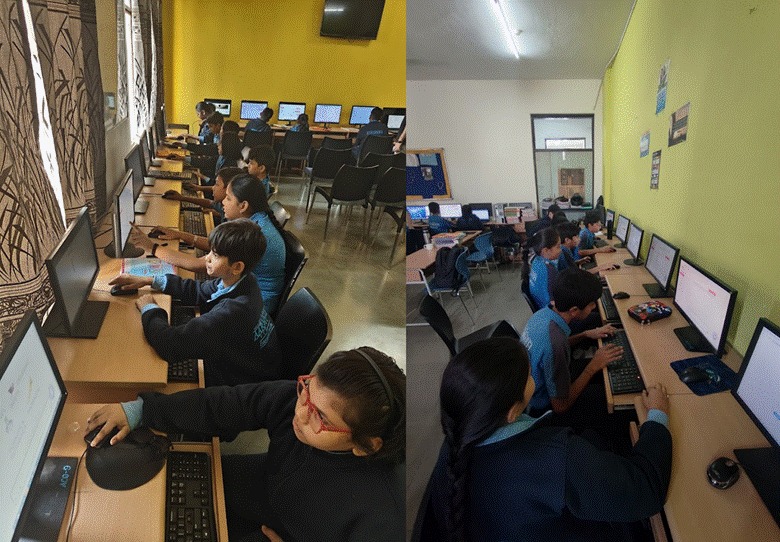
NEP 2020's technology chapter is notably thoughtful. It does not mandate technology adoption for its own sake. It calls for technology that genuinely enhances learning rather than substituting for it, that is accessible to students at all resource levels, that develops digital literacy as a capability rather than just providing digital access, and that is integrated into assessment and administration as well as direct instruction.
The policy's emphasis on digital and AI literacy is particularly significant. NEP 2020 recognises that students who can only consume digital content are not digitally literate in any meaningful sense. Genuine digital literacy requires the ability to evaluate, create, and think critically about digital and AI systems. This is a higher bar than most schools' current technology programs meet.
How AI Ready School implements this: AI Ready School addresses technology integration across every layer. Cypher provides AI-integrated learning for every student. Morpheus integrates AI into teacher workflows for lesson planning, assessment, and monitoring. Zion provides 30+ AI tools across five hubs for student use in a governed, safe environment. NEO AI Innovation Labs provide physical AI infrastructure and structured curriculum for developing genuine AI literacy from Grades 1 through 10.
Critically, the technology integration is connected. Every tool in the Zion platform generates signals that feed into the student's Cypher profile. Lesson content created in Morpheus appears in the student's Cypher experience. Student projects built in the NEO lab feed into the skills profile that teachers and management can see. Nothing is siloed. NEP 2020 calls for technology that is integrated into the educational experience — this is what integrated looks like in practice.
NEP 2020 Mandate 5 | MoE Mandate Oct 2025, CBSE Expert Committee chaired by Prof. Karthik Raman, IIT Madras
AI and Computational Thinking from Class 3: Mandatory AI and Computational Thinking education starting Class 3 from 2026-27, covering AI understanding, data literacy, and computational problem-solving.
This is the mandate that most directly requires new infrastructure rather than just new pedagogy. AI and Computational Thinking education cannot be delivered through a textbook and a willing teacher. It requires hands-on experience with real AI systems, structured curriculum that builds from foundational to advanced, trained mentors who can guide genuine inquiry, and the kind of physical and digital infrastructure that a NEO AI Innovation Lab provides.
The government's mandate is clear: AI & CT will be mandatory from Class 3 in 2026-27. CBSE has constituted the expert committee. NCERT is developing the curriculum. Teacher training through NISHTHA is planned. The infrastructure question is what most schools have not yet solved. A computer lab with ChatGPT does not deliver AI & CT education. A structured, four-level curriculum delivered in a purpose-built environment with trained mentors does.
How AI Ready School implements this: The NEO AI Innovation Lab was designed specifically for this mandate. The four-level curriculum spans Grades 1 through 10 — Level 1 (Grades 1-3) develops AI foundations through play-based exploration. Level 2 (Grades 4-6) introduces hands-on AI experimentation with real tools. Level 3 (Grades 7-8) advances to AI model training and structured research. Level 4 (Grades 9-10) reaches original AI research, open-source project contribution, and competition-ready portfolios.
This curriculum specifically addresses NCERT's emphasis on doing over knowing. Students in NEO do not learn about AI from a textbook. They build AI models. They conduct research. They publish findings. They compete. The AI Startup Show Juniors gives Level 4 students a real-world innovation challenge with professional judges. The portfolio they assemble is evidence of genuine AI capability — the kind that university admissions panels and employers recognise as meaningful.
The Matrix infrastructure that powers every NEO lab ensures that AI models run locally — removing cloud dependency, securing student data, and making AI education consistent regardless of internet connectivity. This is directly relevant for the government schools and Tier 2/3 city schools where the AI & CT mandate applies equally and where cloud-dependent solutions will produce unequal outcomes.
NEP 2020 Mandate 6 | NEP 2020 Chapter 4 and NCF-SE Holistic Progress Card framework
Holistic Development: Move beyond academic performance to develop the whole child — cognitive, socio-emotional, creative, physical, and ethical dimensions of growth.
NEP 2020's holistic development mandate is one of its most philosophically significant departures from the previous system. The policy explicitly rejects the reduction of student development to academic scores and calls for a multi-dimensional understanding of each student's growth — one that captures socio-emotional development, creative capability, physical development, and ethical reasoning alongside academic progress.
The Holistic Progress Card that NEP mandates is intended to replace the traditional marks-based report card with a richer, more complete picture of student development. In practice, most schools' current implementation of holistic assessment is limited because teachers cannot collect the continuous, multi-dimensional data that genuine holistic assessment requires through manual observation alone.
How AI Ready School implements this: The 360-degree student profile that Cypher builds is the operational implementation of the Holistic Progress Card vision. It captures Knowledge depth, Learning Style effectiveness, Cognitive Behaviour patterns (persistence, curiosity, self-monitoring), and Skills development (analytical, communication, creative, collaborative) continuously across every interaction. This is not a once-a-term observation. It is a continuously updated, evidence-based profile of the whole student.
Jonathan Mills, Head of School at a Bangalore international school, describes his experience: the platform gives him the first genuine way to measure whether his school's commitment to holistic development is actually working, rather than being asserted in a mission statement. When he tells his board that his school develops the whole child, he no longer has to rely on philosophy and anecdote. He has data. Not data that reduces development to a number, but data that reflects the genuine complexity of how each student is growing.
NEP 2020 Mandate 7 | NEP 2020 Chapter 5 — Teacher Education and Professional Standards
Teacher Empowerment: Elevate the teaching profession. Reduce teacher administrative burden. Enable teachers to focus on the human work of education that no technology can replace.
NEP 2020's teacher empowerment chapter is sometimes overlooked in discussions of the policy, but it is one of its most practically significant sections. The policy recognises that teachers are the most important variable in educational outcomes and that the current system extracts their time and energy on administrative work that does not use their most valuable capabilities.
The policy calls for professional development pathways, reduced administrative burden, and conditions that allow teachers to exercise the pedagogical judgment and human relationship skills that define excellent teaching. It describes a vision of the teaching profession that is respected, supported, and given the tools to succeed.
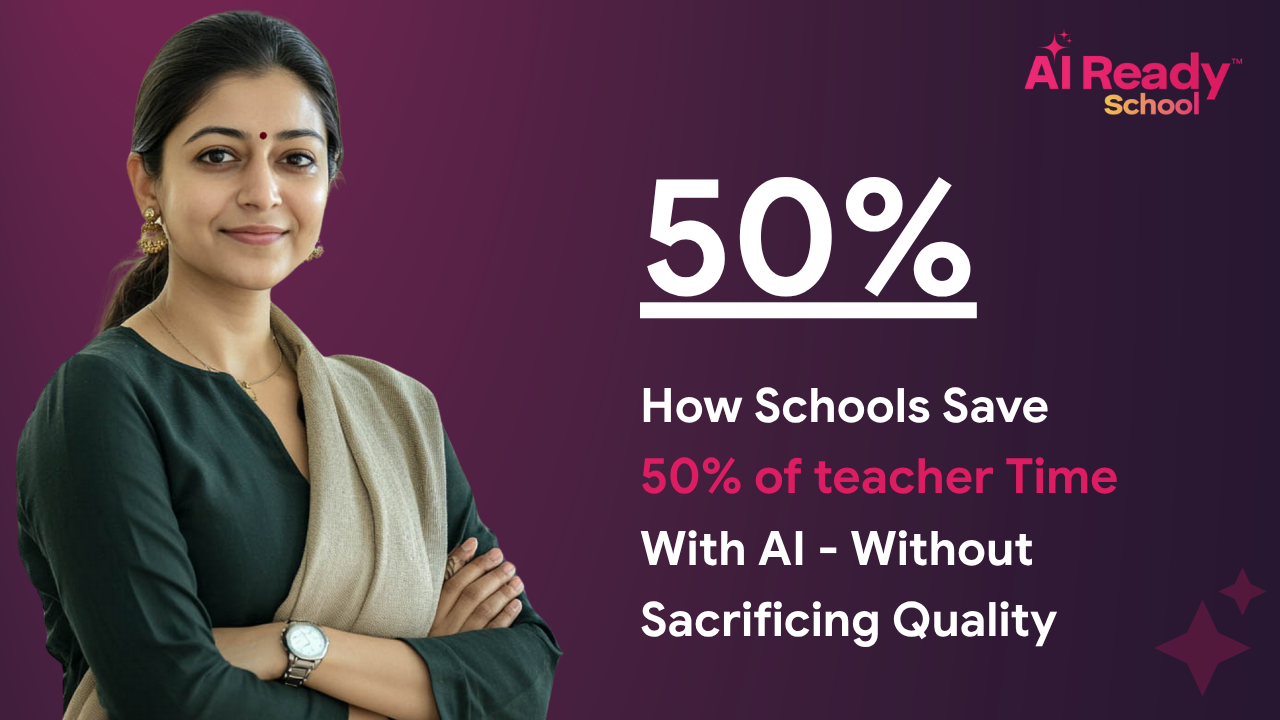
How AI Ready School implements this: Morpheus directly implements the administrative burden reduction that NEP mandates. Lesson planning time drops from 3 hours to 25 minutes. Assessment creation drops from 3.5 hours per week to 45 minutes. Grading 140 submissions drops from 4 hours to 1 hour with teacher oversight. Total non-teaching administrative work drops from 18.5 hours per week to under 5 hours — returning more than 13 hours weekly to the work that only teachers can do.
The Morpheus monitoring dashboard simultaneously elevates teacher capability. A new teacher like James Okafor, in his second year, walks into class knowing exactly where every student stands — the kind of insight that experienced teachers develop over decades. An experienced teacher like Ananya Sharma can have confident, evidence-based conversations with parents and principals rather than relying on impressions. Sarah Chen can bring data to staff meetings that backs her instincts about students who need support. NEP's vision of the empowered, data-informed teacher is what Morpheus creates in practice.
Every CBSE and ICSE school in India is currently navigating NEP implementation under time pressure, with limited guidance on what compliance actually looks like in practice, and in a market flooded with EdTech products that all claim NEP alignment without demonstrating it specifically.
The critical distinction is between compliance as documentation and compliance as delivery. A school that can produce a policy document describing its NEP implementation strategy is not the same as a school that can show you students developing genuine competencies, teachers receiving real-time learning data, AI and computational thinking being taught with hands-on curriculum, and holistic student profiles being built continuously rather than assembled quarterly.
The schools that will be recognised as genuine NEP leaders by 2027 are not the schools that adopted AI as a marketing exercise. They are the schools that adopted AI as an implementation tool — that understood the specific mandates of the policy, found a platform that operationalises them, and can demonstrate measurable outcomes against each mandate.
For CBSE school leaders specifically: the AI & CT mandate from Class 3 in 2026-27 is not a distant aspiration. It is a 2026-27 academic year requirement. The expert committee has been constituted. The curriculum framework is in development. Schools that begin implementation now, building the infrastructure and curriculum delivery capability that the mandate requires, will be ahead of the national implementation curve. Schools that wait will be scrambling for trained personnel and appropriate infrastructure in a market where both are in short supply.
For ICSE school leaders: ICSE's historically strong emphasis on analytical thinking and conceptual depth makes AI Ready School's questioning-first philosophy particularly well-aligned. The platform's emphasis on application and analysis-level competency development reflects exactly the kind of thinking that ICSE examination design rewards. The 77% improvement in analysis-level cognitive tasks from the Raipur implementation is directly applicable to the ICSE outcomes that school leaders and parents care most about.
Adopting AI Ready School is not a technology decision bolted onto NEP compliance. It is an implementation strategy for NEP's most ambitious mandates, built into the platform from the ground up.

Use this as a starting point for your own NEP-AI alignment review. Honest answers will tell you where the gaps are.
• Competency tracking: Can you show, for any student in your school, a continuous record of their competency development across knowledge, skills, and cognitive behaviour — not just their test scores?
• Formative assessment: Are your teachers receiving assessment data that arrives before it is too late to act on it — during the learning cycle, not at its end?
• Personalisation: Does your school have a mechanism for calibrating instruction to individual student needs at scale — across all classes, all subjects, every day?
• AI & CT readiness: Do you have the infrastructure, curriculum, and trained personnel to deliver mandatory AI & CT education from Class 3 in 2026-27?
• Holistic profiles: Are your student records capturing the full dimensions of student development that NEP's Holistic Progress Card envisions — or are they still primarily grade-based?
• Teacher time: Are your teachers spending more than 50% of their working hours on non-teaching administrative work? If so, what infrastructure exists to change this?
• Data sovereignty: Can you answer, for any parent who asks, exactly where their child's AI interaction data is stored and whether it leaves your school's infrastructure?
If the honest answers to these questions reveal gaps — and for most schools, they will — the NEP-AI alignment guide we have developed maps each gap to specific implementation steps. It is the document we recommend every school leadership team work through before making any AI adoption decision in the context of NEP compliance.
NEP 2020 is not a compliance exercise. It is a policy framework built on a genuine understanding of what Indian education needs to become. Its mandates are demanding precisely because the problems they address are real and significant. Competency-based education, formative assessment, personalised learning, and AI literacy are not bureaucratic requirements. They are the outcomes that the next generation of Indian students will need to participate fully in the economy and society they inherit.
The schools that implement NEP genuinely, as opposed to cosmetically, are the schools that will produce these outcomes. They are the schools that parents will seek out as the standard becomes clearer and as the gap between genuine and performed compliance becomes visible in student outcomes and alumni trajectories. They are the schools whose graduates will carry the capabilities that the policy envisioned.
AI Ready School was built to make genuine NEP implementation achievable at scale. Not by doing the work that teachers, students, and school leaders should do, but by providing the infrastructure and capability that makes that work possible without the current constraints of time, data, and resource that keep the most ambitious mandates out of reach for most schools.
The alignment in this blog is not aspirational. It is operational. Every mandate mapped here is implemented in a specific product, with specific evidence of outcomes. The schools that have made this choice are ahead of the NEP implementation curve. The schools reading this blog and recognising the gaps between their current reality and the policy's requirements have the information they need to close them.
To receive the complete NEP-AI alignment guide — which maps every specific NEP 2020 and NCF-SE 2023 mandate to specific AI Ready School implementation steps, with evidence standards and self-assessment frameworks — we invite you to request the NEP-AI alignment guide.
AI Ready School provides a complete AI ecosystem for K-12 schools, including Cypher (personalised AI learning companion), Morpheus (AI teaching agent), Zion (safe AI tool suite), NEO (AI Innovation Labs), and Matrix (sovereign AI infrastructure). All built to operationalise what NEP 2020 envisions.
To discuss NEP alignment at your school: hey@aireadyschool.com or +91 9100013885.
Human First. AI Next.™

.png)