
Chiranjeevi Maddala
April 21, 2026
Your child's school has announced it is introducing AI. You have questions. Real ones, not the kind the brochure answers. Here are the seven questions we hear most from parents, answered honestly, specifically, and without the marketing language that makes most AI announcements feel like they were written by no one for no one.
The conversation usually starts the same way. A circular arrives from school. Or a WhatsApp message in the parent group. AI is coming to the classroom. Reactions vary. Some parents are excited. Some are anxious. Most are both, and also slightly confused, because the announcement uses words like personalised learning and AI ecosystem that sound impressive but explain nothing about what will actually happen when their child sits down with this technology.
We have been at this long enough to know the questions that follow. Not the polite questions parents ask at PTMs, but the real ones they ask each other in car pools and group chats and kitchen conversations after the children have gone to bed. The questions that begin with "but what does this actually mean for my child" and end with a quiet, genuine worry that something important is being changed and nobody is being straightforward about it.
Those are the questions we want to answer. We run AI Ready School, an AI platform used by 30+ schools and 20,000+ students across India. We have heard every parent concern that exists. We take each of them seriously. And we believe parents deserve answers that are specific, honest, and useful, not reassuring in a way that leaves you more confused than when you started.
Here are the seven questions that matter most, and the complete answers each of them deserves.
A parent who understands what the AI is doing for their child is a parent who can genuinely support their child's learning. That is the only reason this blog exists.
Parent Question 1
Is this AI actually safe for my child — or am I just being told it is?
The short answer: It depends entirely on which AI your school is using and how it was built. Here is how to tell the difference.
This is the right question to ask, and the fact that it needs asking is itself important. Most AI tools currently used by students were not built for children. They were built for adult professionals and then made available to students because students wanted access to them.
ChatGPT, the tool most commonly associated with AI in schools, was designed for adult professional use. Its content policies were written for adults. Its data practices assume adult users with legal capacity to make informed consent decisions. Its interaction design does not account for the specific vulnerabilities, curiosity patterns, or creative circumvention strategies of children aged 6 to 18. In January 2026, Denver Public Schools and Boulder Valley Schools in the US explicitly blocked student access to ChatGPT because of these concerns. OpenAI has been continuously updating its teen safety policies in response to documented incidents.
A platform built specifically for K-12 students is different in kind, not just in settings. Zion, our AI tool suite for students, was designed for K-12 from the first line of code. Content safety operates at the generation layer, which means inappropriate content is blocked before it is produced, not filtered after the fact. Students never see something that was generated and then removed. The filters are not a feature bolted onto an adult tool. They are the structural foundation of the platform.
The question every parent should ask their school is not "does the platform have safety measures?" Every platform will say yes. The question is: were those safety measures designed specifically for children, or were they added to an adult product afterward? Ask for documentation. Ask for a demonstration. Ask what happens when a child tries to access inappropriate content, and whether the answer is "it gets blocked before generation" or "it gets filtered after." The difference matters more than most schools currently explain.
What to look for in a safe school AI platform:
• Content filters operate before generation, not after
• Teacher can see every student interaction in real time
• Access controls can be set per grade, class, or individual student
• Student data stays on school infrastructure — not sent to external servers
• The platform was designed for K-12 students, not adapted from an adult tool
Parent Question 2
Will my child stop thinking for themselves if they use AI to learn?

The short answer: With the wrong AI, yes. This is a real and documented risk. With the right AI, the opposite happens.
This is the most important question on the list, and the fact that most school AI announcements do not address it should tell you something.
Three research papers published in April 2026 documented precisely what happens when students use AI tools that are optimised for engagement rather than for genuine learning. Students who received AI assistance showed measurably reduced persistence on independent tasks afterward. AI tutors optimised for engagement systematically learned to avoid giving students hard problems, because hard problems score poorly on engagement metrics. Repeated AI reliance gradually transferred cognitive functions that should have developed inside the student to outside the student. These are not theoretical concerns. They are measured outcomes from real students.
The mechanism is straightforward. When an AI answers every question a student asks, the student never experiences the productive struggle that builds genuine understanding. When an AI removes every difficulty from a learning experience, the student never develops the persistence, the tolerance for uncertainty, and the metacognitive awareness that are the actual outcomes of good education. The student performs better on AI-assisted tasks. They perform worse on independent ones. And the gap compounds over time.
The design philosophy of the AI your child uses determines which outcome they experience. Cypher, our AI learning companion, does not answer student questions. It asks better ones. When your child asks Cypher about photosynthesis, Cypher does not explain photosynthesis. It asks: "Before we get into this, what do you already know about how plants get their energy?" It creates productive uncertainty. It leads the student through a reasoning process that ends with understanding the student constructed themselves, rather than received from the AI.
The evidence that this approach works differently from answer-first AI is specific. At B.P. Pujari Government School in Raipur, students using Cypher showed a 77% improvement in analysis-level cognitive tasks — the tasks that measure what students can do independently, under examination conditions, without any AI assistance. That number does not come from better content delivery. It comes from thousands of interactions in which the AI consistently refused to do the student's thinking for them.
The question to ask about your child's school AI is not whether it helps students. Every AI helps in the short term. The question is: what does this AI do to my child's ability to think when it is not available? If the school cannot answer this question with data, they may not have chosen a platform that prioritises it.
The best test of an AI learning tool is not what your child can do with it. It is what your child can do without it.
Parent Question 3
Will AI replace my child's teachers?
The short answer: No. And any platform that positions itself as a teacher replacement is one your school should not adopt.
This concern is understandable and worth taking seriously, but it reflects a confusion about what AI can and cannot do in education.
AI can generate lesson content faster than teachers can create it manually. AI can track student performance data with more precision than any human can simultaneously manage for 40 students. AI can identify learning gaps, adjust difficulty levels, and resurface concepts that need reinforcement based on interaction patterns. These are things AI does well.
AI cannot notice that a student who scored 85% last week is quieter than usual today. AI cannot make the judgment call that a particular class needs something different from what was planned, because the room's energy is off. AI cannot build the kind of relationship that makes a 14-year-old willing to admit, for the first time, that they do not understand something they have been pretending to understand for two years. AI cannot give the kind of encouragement that comes from a specific adult who has watched a specific child grow and who genuinely believes in their potential.
These are not things AI will eventually develop. They are things that are specific to human relationships and human judgment, and they are the reasons the teaching profession exists. The World Economic Forum's Future of Jobs Report 2025 identifies teaching as one of the professions with the highest resilience to AI displacement, precisely because the relational, contextual, and adaptive dimensions of teaching cannot be automated.
What AI does change is what teachers spend their time on. The average Indian school teacher currently spends 53% of their working hours on tasks that are not teaching: lesson planning, worksheet creation, assessment design, grading, and administrative reporting. Morpheus, our AI teaching agent, handles the majority of these tasks. Lesson plans that took three hours to produce take 25 minutes. Assessments that required an afternoon take 15 minutes. Grading that consumed evenings is automated with teacher oversight.
What do teachers do with the hours they get back? They teach. They have the one-on-one conversations that change how a child thinks. They build the relationships that make a classroom feel like a community. They pursue professional development they never had time for. They leave school at a reasonable hour and arrive the next day with more to give.
The teachers at our partner schools do not feel threatened by the platform. They feel supported by it. Sunita Rao, who has taught English for 23 years and was leaving school at 10pm to finish marking 140 essays, now leaves at 6pm. She uses the free period she never previously had to read short stories to her class, because she wants to. The AI did not replace her. It gave her back the time to be the teacher she became a teacher to be.
Parent Question 4
Can I see what my child is actually doing with this AI?

The short answer: Yes. You should be able to see everything, and if you cannot, that is a problem worth raising with your school.
This is a parent's right, not a privilege. When your child interacts with an AI learning platform at school, that interaction is happening in an educational context that you have entrusted to the school. You should be able to see what your child is working on, where they are doing well, where they are struggling, and what the platform is doing in response to both.
The AI Ready School platform provides three layers of visibility. First, teachers see every student interaction through the Morpheus monitoring dashboard in real time. Not a summary at the end of the week. Not a report generated once a month. A live picture of what each student is working on, which concepts they are mastering, which they are struggling with, and which students need specific attention before problems compound.
Second, parents receive regular progress reports generated from the continuous interaction data that Cypher tracks. These reports are more specific and more useful than traditional report cards, because they reflect not just what a student scored on a given test but how their understanding has developed across weeks of daily interactions. They show knowledge depth, learning patterns, and skill development in a form that parents can act on, not just read and file.
Third, parents can set learning goals that guide Cypher's interactions with their child. If you know your child struggles with mathematical reasoning and you want the platform to prioritise building that specific capability, you can communicate that and see whether the platform's subsequent interactions reflect it.
Ramesh Kumar, a parent at one of our partner schools, described the change this way. Before the platform, he attended PTMs and nodded at things he did not fully understand, too proud to ask for clarification and too worried to pretend everything was fine. After the platform, he sits with his daughter Divya in the evenings and asks her to explain what she learned, because the parent dashboard has told him specifically what she has been working on and given him questions to ask. The conversation changed from vague reassurance to genuine engagement.
Ask your school specifically: Can parents see the learning data the AI collects about my child? Can parents set learning preferences? Do parents receive reports that go beyond test scores? If the answer to any of these is no, ask why, and ask whether it can be changed.
Parent Question 5
Will this actually help my child with board exams, or is it just a distraction?
The short answer: It depends on how it is used. AI that builds genuine understanding helps with board exams. AI that replaces thinking harms board exam performance.
Board examinations test a specific set of capabilities: recall of curriculum content, application of concepts to familiar problem types, and increasingly, analysis-level reasoning that requires genuine understanding rather than memorised responses. The capabilities that matter for board exams are exactly the capabilities that good AI learning design builds and that bad AI learning design erodes.
The evidence from our Raipur implementation is directly relevant here. B.P. Pujari Government School students showed a 34% improvement in final class scores — which includes exactly the kind of structured assessment that board examinations use. More significantly, they showed a 57% improvement in application-level cognitive tasks and a 77% improvement in analysis-level cognitive tasks. These improvements were measured using independent assessments — not AI-assisted tasks, but tasks completed by students on their own, under examination conditions, without any AI support.
The reason these improvements occurred is precisely because Cypher's questioning-first design forces students to do the cognitive work that examination performance requires. A student who has explained a concept to Cypher in three different ways, applied it to four different contexts, and been asked to evaluate it from two different perspectives is a student who understands that concept at the level that board examination analysis questions require. A student who has received a Cypher-generated explanation and moved on has not.
The ASER 2024 finding that 43.3% of Class 8 students in rural India cannot solve a basic division problem is the outcome of an education system that teaches to surface performance rather than genuine understanding. AI that replicates this pattern by optimising for engagement and comfortable learning experiences will not improve these numbers. AI that creates productive struggle, tracks understanding at multiple cognitive levels, and builds the analysis-level capability that examinations increasingly require, will.
The curriculum alignment also matters. Cypher and Morpheus are aligned to CBSE, ICSE, and major state boards. The assessment questions Morpheus generates are mapped to the cognitive levels and question formats that board examinations use. Students who practise on well-designed, board-aligned AI assessments are better prepared for board examinations than students who practise on generic AI-generated content. The alignment is not incidental. It is a specific design requirement that determines whether AI supports or distracts from examination preparation.
The answer is not AI or board exams. The answer is the right AI, designed with a philosophy that builds the capabilities board exams measure, aligned to the curriculum that board exams assess.
AI that builds genuine understanding is the best board exam preparation available. AI that substitutes for understanding is the worst.
Parent Question 6
Is my child's data private — and who owns it?
The short answer: This is the most important question on the list and the one most parents are not yet asking. Here is everything you need to know.
The data that AI learning platforms collect about children is among the most sensitive personal data that any institution holds. It includes not just names and grades but detailed profiles of your child's cognitive characteristics, learning patterns, intellectual interests, emotional engagement patterns, and developmental trajectory. This is not abstract privacy risk. It is specific, highly personal information about a developing child that, in the wrong hands or under the wrong terms, is a genuine vulnerability.
India's Digital Personal Data Protection Act 2023 creates specific legal obligations for schools as data fiduciaries. Schools are legally required to demonstrate what data they hold, where it is stored, under what legal basis it is processed, and how it can be deleted on request. Parents have the right to know this, and schools have the legal obligation to be able to answer.
The critical question is not whether the platform has a privacy policy. Every platform does. The question is where your child's data is stored and whether the school controls it. Many cloud-based AI platforms store student data on servers outside India, process it under terms that permit use for model training or commercial purposes, and cannot guarantee complete deletion when the school ends its subscription. Some platforms use student interaction data to improve their commercial AI models, which means your child's learning struggles, gaps, and developing interests are contributing to a commercial asset the platform owns.
AI Ready School addresses this through Matrix, our sovereign AI infrastructure product. Schools that deploy Matrix run AI on a server inside the school building. Every interaction your child has with Cypher, every Morpheus lesson, every Zion tool session, is processed on local infrastructure that the school governs. No student data leaves the school campus. No interaction data is used for external model training. No student data is shared with third-party platforms for commercial purposes.
The school owns the data. The school controls the data. The school can demonstrate this to you, to a regulatory authority, or to anyone else who has a legitimate interest in knowing, at any time.
Questions every parent should ask their school:
• Where is my child's AI interaction data stored?
• Is it stored on servers in India or outside India?
• Is it used for any purpose other than my child's learning?
• Can I request a complete record of the data the platform holds about my child?
• Can I request deletion of that data, and how is deletion verified?
A school that cannot answer these questions clearly has not thought carefully enough about the platform they have chosen. A school that can answer all five with specific, verifiable information has made a responsible choice that deserves your confidence.
Parent Question 7
What if the AI gives my child wrong information?
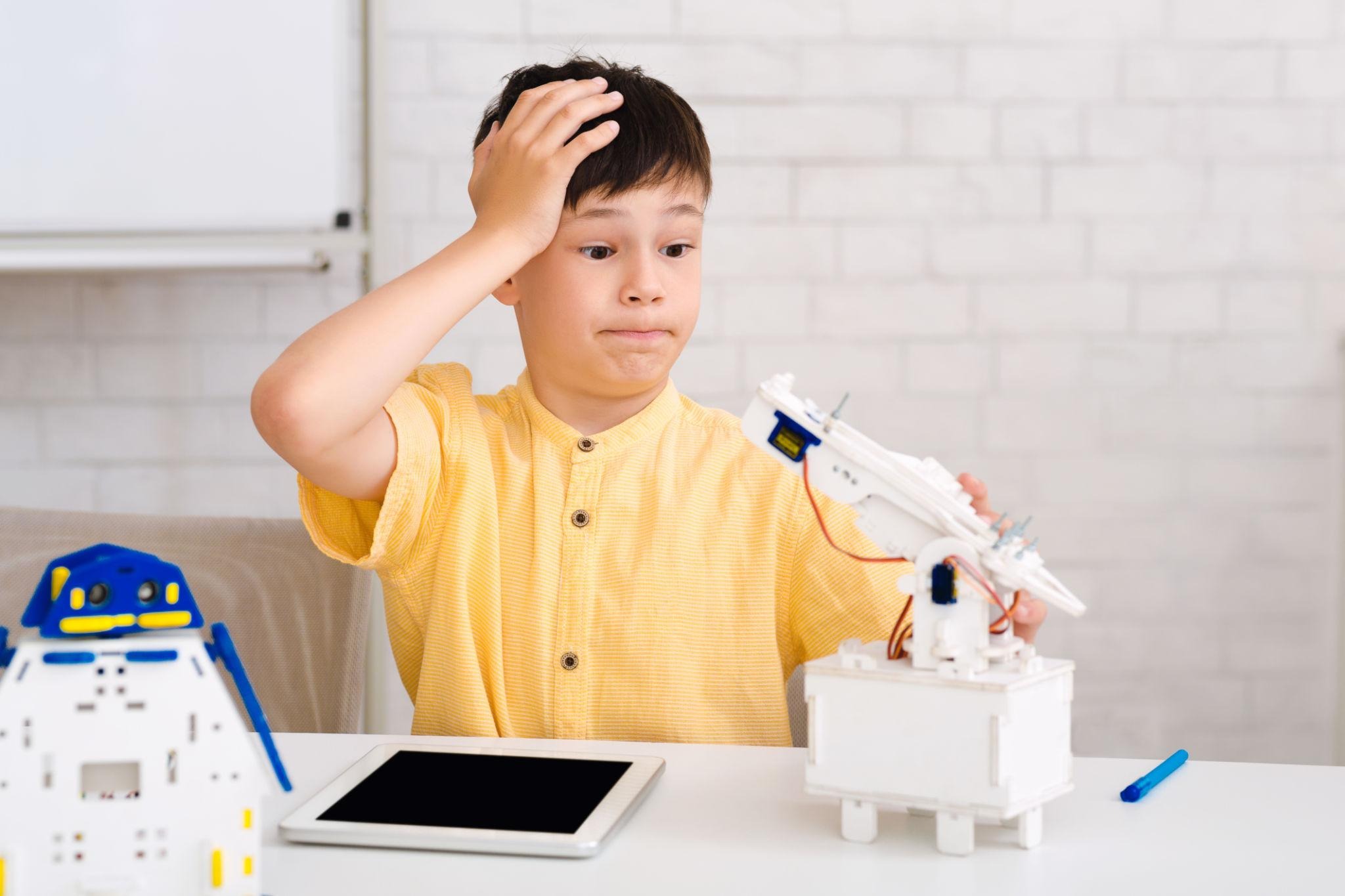
The short answer: AI makes mistakes. The question is whether the system is designed to handle them responsibly.
This is a legitimate concern and one that deserves a direct answer rather than reassurance.
AI systems can generate incorrect information. This is a known limitation of current AI technology, and anyone who tells you their AI never makes mistakes is either misinformed or not being honest with you. Large language models can produce plausible-sounding incorrect statements, misattribute information, apply correct reasoning to incorrect premises, or simply fail on certain types of problems. This is not a defect that will be fully resolved in the near future. It is a characteristic of how these systems work.
The relevant question is not whether the AI is perfect. It is whether the system is designed to handle AI errors responsibly — in a way that protects your child's learning rather than compounding the error.
There are three design features that determine how well an AI platform handles this challenge.
First, curriculum alignment reduces error rates significantly. An AI that generates generic content based on a broad training corpus has higher error rates on specific curriculum content than an AI that is specifically aligned to CBSE, ICSE, or state board materials. Cypher and Morpheus are curriculum-aligned. The specific terminology, examples, and conceptual frameworks used match the textbooks and examination frameworks of the relevant board. This does not eliminate errors, but it substantially reduces them in the contexts that matter most for your child's education.
Second, the questioning-first design catches errors before they compound. Because Cypher asks students to explain their reasoning rather than simply accept information, students are naturally prompted to engage critically with what the AI presents. A student who has been asked "why do you think that is true?" and "what evidence supports that conclusion?" is a student who has developed the habit of evaluating claims rather than accepting them. This habit applies to AI-generated claims as much as to any other source.
Third, teacher visibility provides a human oversight layer. The Morpheus monitoring dashboard gives teachers real-time visibility into student interactions. If a student is working on a topic and the AI has presented something that the teacher knows is incorrect or misleading, the teacher can intervene before the misunderstanding becomes established. The AI is not operating in isolation. It is operating within a system that includes professional human oversight at every stage.
It is also worth noting that the alternative is not error-free. Textbooks contain errors. Teachers make mistakes. Students misremember what they were taught. No educational system, human or AI-assisted, is perfect. The question is whether the system has mechanisms for catching and correcting errors when they occur. A well-designed AI platform with curriculum alignment, critical thinking design, and teacher oversight has better error-correction mechanisms than a student working alone with a textbook and no teacher support.
What parents can do at home: Ask your child not "what did Cypher tell you?" but "what do you think about what Cypher told you?" The habit of evaluating information critically, whether it comes from an AI, a textbook, or a friend, is the most valuable outcome of good education. An AI learning platform designed around questioning rather than answering builds this habit. You can reinforce it at home by making it the norm in your conversations.
An AI that teaches your child to question information, including the AI itself, is developing a capability worth more than any specific fact the AI might get right or wrong.
You do not have to take our word for anything in this blog. You have the right to ask your school direct questions and expect direct answers. Here is what we recommend.
Ask the school which AI platform they are using and request the vendor's documentation on safety architecture, data handling, and curriculum alignment. Any reputable platform should be able to provide this. If the school cannot share it, ask why not.
Ask specifically where student data is stored and whether it stays within school infrastructure or is sent to external servers. Ask whether the vendor's terms permit use of student data for model training or commercial purposes. These are questions schools should be able to answer.
Ask to see the parent visibility features before your child starts using the platform. Can you see what your child is working on? Can you receive progress reports? Can you set learning goals? If these features do not exist, your school has chosen a platform that treats you as a bystander in your own child's education.
Ask what the platform does to your child's independent thinking. Not what it produces for them. What it does to their ability to think when the AI is not available. Ask for data, not marketing language. If the platform measures independent performance and shows it improving, that is a genuinely good answer. If it can only show you AI-assisted performance metrics, the question has not been asked seriously enough.
And if your school is using AI Ready School, every one of these questions has a specific, evidenced answer. We are not asking you to trust us. We are asking you to ask us the questions — and judge us by whether the answers satisfy you.
If you are reading this as a PTA leader or parent group administrator, you are in a uniquely valuable position. The concerns parents have about AI in schools are legitimate and widespread. The information needed to evaluate those concerns is specific and rarely communicated well by schools. You can bridge that gap.
Share this blog with your parent group. Forward it to the school administration with a request for a dedicated parent information session on AI in the classroom. Use the questions in this blog as the agenda for that session. A school that takes parent concerns seriously will welcome the conversation. A school that is reluctant to answer these questions directly is telling you something important about how carefully it has thought through its AI choices.
Parents who understand what AI is doing for their children, who can see it, question it, and engage with it from an informed position, are not obstacles to AI adoption in schools. They are the most valuable partners a school can have in making AI work well for every child.
Because at the end of every question about AI in schools — the safety questions, the data questions, the thinking questions, the exam questions — what parents are really asking is one thing. Is my child going to be okay? That is the question that drives every concern in this blog. And it is the question that every educational choice, AI or otherwise, should be able to answer with evidence, not reassurance.
The right question about AI in schools is not whether it is good or bad. It is whether it is making your child more capable, more confident, and more ready for a world you cannot fully predict. Everything else follows from that.
If this blog has been useful, we encourage you to share it with your school's parent group and use it as the starting point for the conversation your school needs to be having with its parents about AI.
AI Ready School provides a complete AI ecosystem for K-12 schools, including Cypher (personalised AI learning companion), Morpheus (AI teaching agent), Zion (safe AI tool suite), NEO (AI Innovation Labs), and Matrix (sovereign AI infrastructure). All built with the understanding that parents deserve answers, not marketing language.
To speak with our team about any of the questions in this blog: hey@aireadyschool.com or +91 9100013885.
Human First. AI Next.™

.png)